Table of Contents
ToggleIntroduction to Public Blockchains
Imagine a digital record book that anyone in the world can see, use, and verify. No company owns it. No government controls it. Once something is written in it, it cannot be secretly changed. That is the basic idea behind a public blockchain.
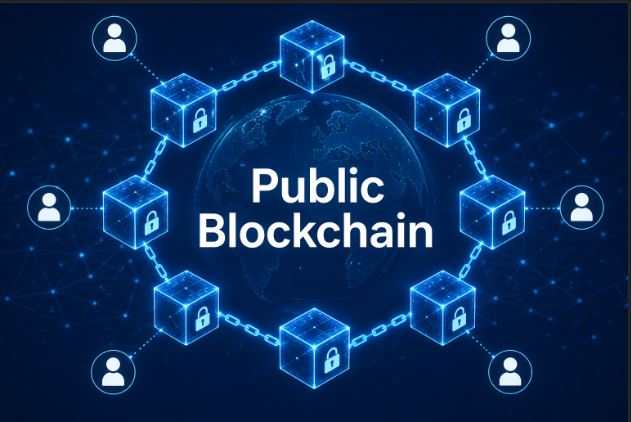
A public blockchain is an open digital network where transactions are recorded and shared across thousands of computers. Anyone can join the network, check the data, or send transactions. There is no central authority controlling it.
The most famous example is Bitcoin, created by Satoshi Nakamoto. Instead of trusting a bank, the blockchain verifies and records every transaction.
Think of it like a public notebook on the internet. Every time someone sends money, the transaction is written in that notebook and confirmed by thousands of computers before becoming permanent.
For example, if you send money to a friend using Bitcoin, the public blockchain network verifies the payment. Once confirmed, the transaction becomes a permanent record anyone can view.
Today, public blockchains are used for more than cryptocurrencies. Platforms like Ethereum allow developers to build apps and financial services on these networks.
In simple words, public blockchains are helping create a new internet where people exchange value directly without middlemen.
What is Blockchain?
Blockchain is a digital system that records information in blocks and links them together in a secure chain. The data is stored across many computers instead of one central server, which makes it transparent and hard to change.
In simple words, blockchain is like a shared online record book where every transaction is verified by a network and permanently stored.
Real life Example
For example, when someone sends Bitcoin, the transaction is checked by thousands of computers and then added to the blockchain. Once recorded, it becomes part of a permanent history that anyone can verify.
What is a Public Blockchain?
A public blockchain is basically a digital record book that anyone can join, see, and use.
No owner. No gatekeeper. No permission needed.
It runs on thousands of computers around the world instead of one central server.
So once something is added, it’s almost impossible to secretly change it.
Public Blockchain Meaning Explained in Easy Words
Think of it like a Google Doc that everyone can view, but:
- No single person controls it
- Every change is recorded
- Everyone has the same copy
- Nothing can be secretly edited
That’s a public blockchain.
It’s open, transparent, and shared with everyone.
How Does a Public Blockchain Work?
Let’s keep it super simple.
1. A transaction happens
Someone sends something. Like crypto or digital data.
2. The network checks it
Thousands of computers (called nodes) verify it.
They make sure it’s real. No cheating.
3. It gets added to a “block”
Once approved, the transaction is grouped into a block of data.
4. The block joins the chain
That block is linked to the previous ones.
Now it becomes part of a permanent chain of records.
5. It stays forever
Once added, it can’t be changed quietly.
Everyone on the network has the same updated record.
Real-Life Example
Let’s say you send Bitcoin to a friend.
Without a public blockchain:
- A bank would track it
- You would depend on one company
- Records are stored in one system
With a public blockchain:
- The transaction is checked by a global network
- No bank is needed
- Everyone can verify it happened
- The record is permanent and transparent
So it’s like sending money in front of a global audience that keeps the record forever.
What Are The Public Blockchains?
Public blockchains are open digital networks where anyone can join, view transactions, and participate in verifying data. No company or government owns the system. Instead, thousands of computers around the world maintain the network together.
Think of a public blockchain like a shared online ledger. Everyone can see the entries, and once information is added, it cannot easily be changed. This transparency helps build trust between people who do not know each other.
Bitcoin:
A well-known example is Bitcoin. When someone sends Bitcoin, the transaction is verified by many computers on the network and then recorded permanently on the blockchain.
Real-life Example.
Here’s a simple real-life example. Imagine you send money to a friend in another country. Instead of a bank approving the transfer, the public blockchain network verifies it. Once confirmed, the transaction becomes part of a public record that anyone can check.
Ethereum:
Another popular public blockchain is Ethereum, which allows developers to create apps, smart contracts, and financial services on top of the network.
In simple words:
Public blockchains allow people anywhere in the world to exchange value directly, safely, and transparently without relying on middlemen.
Why Public Blockchains Were Created?
Before blockchain, digital systems had one big weakness: trust.
Everything depended on banks, companies, or middlemen.
Public blockchains were created to remove that need.
The main idea behind it
The goal was simple:
-Let people deal directly with each other
– Without needing a central authority to control everything
So instead of trusting one company, you trust the system itself.
The problem before public blockchains
Before this idea came up:
- Banks controlled money transfers
- Companies controlled user data
- Payments could be delayed or blocked
- Records could be changed by one authority
Basically, one system had full control.
And if that system failed… everything got affected.
What public blockchains changed
Public blockchains flipped the model.
Now:
- No single owner controls the network
- Everyone can verify transactions
- Data is shared across thousands of computers
- Records can’t be secretly changed
It’s like moving from “one boss decides everything”
to “everyone checks everything together”.
Real-Life Example
Imagine sending money to a friend overseas.
Before blockchain:
- A bank processes it
- Fees are high
- It can take days
- The bank can even block it
With a public blockchain:
- You send it directly
- No bank in the middle
- The network verifies it
- It arrives faster and more openly
Same action. Very different system.
Examples of Public Blockchains
Public blockchains are open networks where anyone can join, send transactions, and verify data. Many well-known blockchain platforms work this way. Here are some popular examples.
Bitcoin
The first and most famous public blockchain is Bitcoin. It was created by Satoshi Nakamoto in 2009.
Its main purpose is digital money. People use Bitcoin to send payments without banks.
Real example:
A freelancer in Pakistan can receive Bitcoin from a client in the USA within minutes. No bank approval needed.
Ethereum
Another major public blockchain is Ethereum.
Ethereum allows developers to build smart contracts and decentralized apps (DApps). These apps run automatically on the blockchain.
Real example:
Many decentralized finance apps allow users to lend or borrow crypto directly without traditional banks.
Solana
Solana is known for very fast transactions and low fees.
It is designed to support gaming apps, NFTs, and large-scale blockchain platforms.
Real example:
NFT marketplaces and blockchain games often use Solana because transactions are quick and cheap.
Cardano
Cardano focuses on security, research, and sustainability.
It uses an energy-efficient system to verify transactions.
Real example:
Cardano is being explored for digital identity systems and educational record verification.
Polkadot
Polkadot connects different blockchains so they can communicate with each other.
Real example:
Developers can build multiple blockchains that share information through the Polkadot network.
In simple words:
Public blockchains like Bitcoin, Ethereum, and Solana are open networks where anyone can participate. They power cryptocurrencies, apps, and digital services used by millions of people around the world.
Popular Public Blockchains
Here are the most popular public blockchains today — explained in a simple, real-world way.
1. Bitcoin — The original public blockchain
This is the first-ever blockchain.
- Mainly used as digital money
- People call it “digital gold”
- Very secure, very decentralized
Real-life example:
Like storing value in a digital safe that nobody controls.
2. Ethereum — The smart contract giant
This is more than money.
- Runs apps (called dApps)
- Powers DeFi and NFTs
- Huge developer ecosystem
Real-life example:
Like a global app store that runs without Apple or Google.
3. Solana — The speed machine
Known for speed and low fees.
- Very fast transactions
- Cheap network costs
- Popular for gaming and NFTs
Real-life example:
Like a super-fast highway with almost no toll tax.
4. XRP — The banking bridge
Focused on global payments.
- Used for cross-border transfers
- Very fast settlement times
- Used by financial institutions
Real-life example:
Like sending money abroad in seconds instead of days.
5. Cardano — The research-based blockchain
Built slowly, but carefully.
- Focus on security and research
- Uses Proof of Stake
- Energy efficient
Real-life example:
Like building a bridge after engineering everything perfectly.
6. Avalanche — The scalable network
Designed for speed + scalability.
- High transaction speed
- Supports multiple blockchains (subnets)
- Used in DeFi apps
Real-life example:
Like having multiple express lanes running at the same time.
7. Polkadot — The connector chain
This one connects blockchains together.
- Lets different chains talk to each other
- Improves interoperability
- Uses “parachains”
Real-life example:
Like a central airport connecting many countries.
🧠 Simple takeaway
Public blockchains are not all the same.
Some are:
- Money focused (Bitcoin)
- App focused (Ethereum)
- Speed focused (Solana)
- Banking focused (XRP)
Each one solves a different real-world problem.
How Public Blockchains Works?
How Public Blockchain Transactions Work?
When you send something on a public blockchain, it doesn’t just “go through” like a normal app.
It gets checked, verified, and locked into a public system.
Here’s how it happens.
What happens when you send crypto on a public blockchain?
Say you send crypto to a friend.
Step 1: You hit “send”
You enter the amount and your friend’s address.
Step 2: The transaction is broadcast
Your request goes out to the whole network.
Not just one server. The entire system sees it.
Step 3: The network checks it
Thousands of computers check:
- Do you have enough balance?
- Is the address valid?
- Is everything legit?
Step 4: It gets approved and grouped
Once verified, your transaction joins other transactions in a “block.”
Step 5: The block is added to the chain
That block is permanently added to the blockchain.
Done. It’s now part of history.
What is Mining in Public Blockchain?
Mining is like the “verification job” of the blockchain.
Miners are powerful computers that:
- Solve complex puzzles
- Verify transactions
- Add new blocks to the chain
As a reward, they usually earn crypto.
Think of miners as digital accountants keeping the system honest.
What is a Node in Public Blockchain?
A node is just a computer connected to the blockchain network.
But here’s the key part:
Each node has a copy of the blockchain.
Nodes:
- Check transactions
- Store data
- Help keep the system running
So instead of one central server, you have thousands of mini “watchers” keeping everything in sync.
How Data is Stored in a Public Blockchain
Data is not stored in one place.
It’s stored in blocks that are linked together in a chain.
Each block contains:
- Transaction data
- Time stamp
- A unique code (hash)
- Link to the previous block
Once a block is added, it can’t be changed without changing everything after it.
That’s what makes it secure.
Real-Life Example
Imagine sending money to a friend using a public blockchain.
Without blockchain:
- A bank processes it
- You wait hours or days
- One company controls everything
With blockchain:
- Your transaction is checked by a global network
- Miners verify it
- Nodes confirm it
- It gets added to a permanent record
- Your friend receives it directly
No middleman. No delays. Full transparency.
Simple takeaway
Public blockchain works like this:
- You send a transaction
- The network verifies it
- Miners confirm it
- Nodes store it
- It gets added permanently to the chain
In short:
It’s a global system where thousands of computers work together to verify and store data safely without needing a central authority.
Key Features of Public Blockchain You Should Know
Public blockchain sounds technical, but the idea is actually simple.
It’s just a system built to be open, secure, and hard to cheat.
Here are the main features you should know.
1. Open to everyone
Anyone can join a public blockchain.
- No permission needed
- No sign-up approval
- No “gatekeeper”
It’s fully open to the public.
2. Fully transparent
Every transaction is visible on the network.
- Anyone can verify data
- Nothing is hidden in the background
- Records are publicly checkable
So trust comes from visibility.
3. Highly secure
Once data is added, it becomes extremely hard to change.
- Each block is linked to the previous one
- Changing one block breaks the chain
- That makes tampering nearly impossible
4. Decentralized system
No single company or government controls it.
- Runs on thousands of computers (nodes)
- Power is shared across the network
- No central point of failure
So no one person is in charge.
5. Permanent records
Once something is recorded, it stays there forever.
- You can’t secretly delete it
- You can’t quietly edit it
- History is always preserved
6. Consensus-based validation
Transactions are not approved by one authority.
Instead:
- The network agrees together
- Miners or validators check data
- Only valid transactions get added
Real-Life Example
Think about sending crypto to a friend.
With public blockchain:
- Everyone in the network can verify your transaction
- No bank is involved
- The record is stored forever
- No one can secretly change it later
It’s like making a payment that the whole world can witness and confirm, but no one can tamper with.
Simple takeaway
Public blockchain is built on:
- openness
- transparency
- security
- decentralization
- permanent records
In short:
It’s a system where trust comes from the network itself, not from a single company or authority.
Use Cases of Public Blockchains
Public blockchains aren’t just “crypto stuff.” They’re actually used in real life in a lot of practical ways. Let’s break it down simply.
1. Digital money and payments
Public blockchains let people send money without banks.
- Fast transfers across countries
- Lower fees than traditional banking
Example:
Someone in Pakistan sends money to the USA in minutes using crypto instead of waiting days for a bank transfer.
2. Smart contracts (automatic agreements)
These are self-executing contracts.
No lawyer. No middleman. Just code.
Example:
You rent a house online.
Once you pay, the system automatically gives you access — no landlord needed.
Used heavily on Ethereum.
🎨 3. NFTs (digital ownership)
Public blockchains prove ownership of digital items.
- Art
- Music
- Game items
👉 Example:
You buy a digital artwork, and the blockchain proves it’s yours — like owning a signed certificate.
4. Decentralized finance (DeFi)
This is “banking without banks.”
You can:
- Lend crypto
- Borrow money
- Earn interest
Example:
Instead of going to a bank for savings interest, you deposit crypto into a DeFi app and earn rewards automatically.
5. Cross-border payments
Public blockchains make international transfers faster.
Used in networks like XRP.
Example:
A freelancer in Asia gets paid from Europe in seconds, not days.
6. Gaming and virtual worlds
Blockchain games let players truly own in-game items.
- Weapons
- Skins
- Characters
Example:
You win a rare sword in a game — and you can actually sell it for real money.
7. Supply chain tracking
Companies use blockchain to track products.
- Food
- Medicine
- Luxury goods
Example:
You scan a QR code on a mango and see exactly which farm it came from.
8. Voting systems (emerging use)
Blockchain can make voting more transparent.
- Hard to fake votes
- Easy to verify results
Example:
Digital elections where every vote is recorded and cannot be changed.
Simple takeaway
Public blockchains are used for:
- Sending money
- Running apps
- Proving ownership
- Building finance systems
- Tracking real-world goods
In simple words:
They are turning the internet into a system where value can move like information.
Advantages of Public Blockchains
Public blockchains have become popular for a reason. They solve real problems in a very simple but powerful way. Let’s break down the main advantages in a real, easy style.
1. Fully open for everyone
No permission needed. Anyone can join.
👉 Example:
You don’t need a bank account to use crypto. Just a phone and internet is enough.
That’s why networks like Bitcoin and Ethereum are used worldwide.
2. No middleman
No banks. No agents. No third party.
👉 Example:
If you send money abroad, it goes directly to the receiver. No bank delay, no extra approval.
3. Very high security
Public blockchains are hard to hack.
Why?
Because data is stored on thousands of computers at once.
👉 Example:
Changing one transaction is like trying to edit thousands of copies of the same notebook at the same time.
4. Full transparency
Everything is visible on the network.
- Transactions can be checked anytime
- No hidden manipulation
👉 Example:
Like a public ledger where everyone can see every entry.
5. Fast global transfers
Money can move across countries in minutes.
Used heavily in networks like XRP.
Example:
A freelancer in Pakistan gets paid from the UK in seconds instead of waiting 3–5 days.
6. Lower transaction costs
No banks = fewer fees.
Example:
Sending $100 internationally might cost $10 via banks, but just cents on blockchain.
7. Trust without trust
This is the biggest idea.
You don’t need to trust people — you trust the system.
👉 Example:
Two strangers can do business online without ever meeting or knowing each other.
8. Innovation and new apps
Public blockchains allow developers to build:
- Apps
- Games
- Finance systems
Example:
DeFi apps let people borrow or invest money without banks.
Simple takeaway
Public blockchains are powerful because they are:
- Open to everyone
- Secure by design
- Transparent
- Cheap and fast
- Trust-free
In simple words:
They replace middlemen with math and code.
Why Public Blockchains Are Important in 2026 ?
Public blockchains matter more in 2026 because the world is moving toward digital money, digital identity, and online trust systems. And people want systems that don’t depend on one central authority.
A public blockchain is basically a system where no single company is in control, and everyone can verify what’s happening.
That idea is becoming a big deal right now.
Trust Without Middlemen
Normally, we trust banks, apps, or companies to handle our money and data.
Public blockchains remove that need.
For example, sending Bitcoin directly to someone means no bank approval, no delays, and fewer fees.
Global Payments Are Faster
In 2026, people work online more than ever.
A freelancer in Pakistan can get paid from the US in minutes using blockchain.
No waiting for international bank transfers.
Just direct digital payment.
More Financial Access
Millions of people still don’t have bank accounts.
Public blockchains fix this.
Anyone with a phone can store, send, and receive money.
No paperwork. No branch visits.
Better Security
Because data is stored across thousands of computers, it’s very hard to hack or change.
That makes public blockchains useful for:
- Banking
- Healthcare records
- Digital identity
Powering Web3 Apps
Platforms like Ethereum allow apps to run without central servers.
This is the base of Web3:
- Decentralized apps
- Smart contracts
- NFT marketplaces
Real-Life Example
Imagine you send money to a friend in another country.
Instead of:
- Bank fees
- 2–3 day delay
- Hidden charges
A public blockchain does it:
- Instantly
- Cheaply
- Transparently
You can even track the transaction live.
Final Thought
In 2026, public blockchains are important because they are changing one big thing:
Who we trust online
Instead of trusting companies, we trust technology and networks.
That shift is why blockchain is becoming a key part of the digital future.
Key Features of Public Blockchains Explained Simply
Public blockchains sound technical, but the core features are actually easy to understand. Think of it like a shared digital system that everyone can trust without a middleman.
Let’s break it down simply.
1. Decentralization 🌍
No single company or person controls it.
Instead, thousands of computers around the world manage the network together.
Real example:
When you send Bitcoin, no bank approves it. The network itself handles everything.
2. Transparency 👀
Everything on a public blockchain is visible.
Anyone can check transactions anytime.
It’s like a public record that everyone can see but no one can secretly change.
3. Security 🔐
Public blockchains are very hard to hack.
Why? Because data is stored across thousands of computers.
A hacker would need to control most of them at the same time, which is nearly impossible.
4. Immutability 🧱
Once data is added, it cannot easily be changed or deleted.
This creates a permanent history of all transactions.
Example:
If a Bitcoin transaction is recorded today, it stays there forever.
5. Consensus Mechanism ✔️
Before anything is added, the network must agree it’s valid.
This is called “consensus.”
It stops fake or double transactions.
6. Global Access 🌐
Anyone can join a public blockchain.
No permission needed.
All you need is internet access.
Real-Life Example 💡
Imagine sending money to a friend abroad.
Normally, a bank checks it, charges fees, and takes time.
On a public blockchain:
- The network verifies it
- The transaction is recorded
- Your friend receives it fast
No middleman. No delay.
Final Thought 🧠
Public blockchains are powerful because they combine:
trust + transparency + security + global access
That’s why they are becoming a big part of digital finance and Web3 in 2026.
Public Blockchain vs Private Blockchain
People often mix these two up, but the difference is actually simple.
Public Blockchain
- Open for everyone
- Anyone can join and verify transactions
- Fully decentralized
Example: Bitcoin
Anyone in the world can send, receive, or check transactions.
Real-life feel: like a public website anyone can visit.
Private Blockchain
- Controlled by one company or organization
- Only selected people can access it
- More centralized
Example use: Banks or companies tracking internal data.
Real-life feel: like a company’s private database.
Difference Between Blockchain and Bitcoin
This is one of the most common confusions.
Blockchain
- It is a technology
- A system to store and verify data
- Can be used in many industries
Bitcoin ( ₿ )
- It is a digital currency
- Built on blockchain technology
- Used for sending and storing value
Simple Example:
Blockchain is like the internet, and Bitcoin is like email on the internet.
You can use internet for many things, but email is just one application.
.
Real-Life Uses of Public Blockchains Today
Public blockchains are not just tech talk anymore. They are already running in the real world, quietly powering things you use or hear about every day.
Let’s make it super simple.
Sending Money Across Borders
Public blockchains make international payments fast and direct.
No bank delays. No heavy fees.
Real example:
A freelancer in Pakistan gets paid from the USA in Bitcoin within minutes.
Banking and Finance
Banks are using blockchain ideas to improve their systems.
They use it for:
- Faster transfers
- Fraud detection
- Secure record keeping
Real example: sending money abroad in hours instead of 2–3 days.
Healthcare Records
Hospitals are testing blockchain for medical data.
It helps:
- Store patient records safely
- Share reports securely
- Avoid data tampering
Real example: your medical history can be accessed safely in another hospital when needed.
Supply Chain Tracking
Public blockchains help track products from start to finish.
They show:
- Where the product came from
- How it moved
- Whether it is real or fake
Real example: tracking food from farm → factory → supermarket shelf.
Digital Identity
Blockchain can store secure digital IDs.
It helps people:
- Log in safely
- Prove identity online
- Avoid identity theft
Real example: one verified digital ID used instead of multiple passwords everywhere.
Crypto Payments and Apps
Most people first hear about blockchain through crypto.
Platforms like Ethereum power:
- Crypto apps
- Smart contracts
- Digital marketplaces
Real example: buying NFTs or using DeFi apps without banks.
Final Simple Idea
Public blockchains are already everywhere.
They are used for:
- Money transfers
- Banking
- Healthcare
- Supply chains
- Digital identity
In simple words:
Blockchain is slowly becoming the hidden system that makes the digital world faster, safer, and more transparent.
Challenges and Limitations
Public blockchains are powerful, but they’re not perfect. They come with real challenges that people face in the real world. Let’s break them down simply.
1. Slow speed during heavy use
When too many people use the network, it slows down.
👉 Example:
During NFT hype, Ethereum got congested.
Transactions became slow and expensive.
It’s like a highway jam during rush hour.
💸 2. High transaction fees
Fees can go up when the network is busy.
👉 Example:
Sending a small transaction could sometimes cost more than the amount itself.
That’s frustrating for everyday users.
3. Scalability issues
Public blockchains struggle to handle millions of users at once.
Even strong networks like Bitcoin were not originally built for massive global usage.
👉 Example:
Like a small shop suddenly trying to serve a whole city.
4. Lack of privacy
Everything is public.
- Anyone can see transactions
- Wallet activity can be tracked
👉 Example:
If someone knows your wallet address, they can see your spending history.
5. Security depends on users
The network is secure, but humans are the weak point.
Example:
If you lose your private key, your money is gone forever. No recovery button.
6. Complexity for beginners
It’s not always easy to understand.
- Wallets
- Keys
- Gas fees
Example:
A new user might feel lost trying to send their first crypto transaction.
7. Risk of scams
Public blockchains can’t stop fake projects.
Example:
Fake tokens or scam coins can trick users into losing money.
The system is open — but that also means scammers can enter.
8. Energy usage (for some networks)
Proof-of-work blockchains use a lot of energy.
Example:
Mining networks like Bitcoin require powerful machines running 24/7.
Simple takeaway
Public blockchains are strong, but they have limits:
- Can get slow
- Can get expensive
- Hard for beginners
- Not fully private
- Still evolving
In simple words:
They are like powerful engines — but still being upgraded for everyday global use.
Public Blockchain in Banking Systems
Public blockchains are slowly changing how banks move money and store records.
Instead of relying only on slow traditional systems, banks are testing blockchain to make things faster, cheaper, and more transparent.
How it works in simple words
In a public blockchain system:
- Transactions are recorded on a shared network
- Thousands of computers verify the transfer
- No single bank controls the process
- Everything is tracked in real time
This removes a lot of delays and manual work.
Why banks are using it
Banks are interested in blockchain because it helps with:
- Faster international transfers
- Lower transaction fees
- Reduced fraud risk
- Clear and permanent records
Real-life example
Imagine sending money from Pakistan to the USA.
Normally:
- It takes 2–5 days
- Multiple banks are involved
- High fees are charged
With blockchain-based systems:
- The transfer can happen in minutes
- Fewer middlemen are involved
- Lower cost overall
That’s why systems connected to Bitcoin and similar networks are being explored for cross-border payments.
Simple takeaway
Public blockchain in banking is not about replacing banks completely.
It’s about making banking faster, more transparent, and more efficient.
In simple words:
It’s like upgrading an old slow system into a real-time global money network.
Why Public Blockchains Are Secure
Public blockchains are secure because they don’t rely on one system or one server.
Instead:
- Data is copied across thousands of computers
- Every transaction is checked by the network
- Once added, it’s locked in place
So if someone tries to cheat or change data, the system instantly notices.
To actually change one record, they’d have to change thousands of copies at the same time.
That’s what makes it so hard to break.
🔍 Is Public Blockchain Really Transparent?
Yes… and that’s the whole point.
Everything on a public blockchain is visible.
- Transactions can be tracked
- Records can be verified
- Anyone can view the history
But here’s the twist:
👉 You see the transaction
👉 But you don’t always see the real-world identity behind it
So it’s transparent, but still somewhat private.
Think of it like a public ledger where names are replaced with codes.
🏛️ Why Public Blockchain Has No Central Authority
There is no boss controlling a public blockchain.
Because:
- It runs on a global network of computers (nodes)
- Everyone keeps a copy of the data
- Decisions are made by agreement, not command
This system is called decentralization.
No single company can shut it down or change rules alone.
That’s the big difference from banks or traditional systems.
Public Blockchain in Healthcare Industry
Healthcare is full of sensitive data. Reports, prescriptions, test results—everything needs to stay accurate and secure. That’s where public blockchain is starting to help.
Simple idea
Public blockchain in healthcare means:
- Patient records are stored in a secure digital network
- Hospitals and doctors can verify data
- No single system can secretly change records
- Data is shared safely when needed
It’s like a shared medical record system that no one can tamper with.
Why it matters
Healthcare systems struggle with:
- Lost patient records
- Wrong data updates
- Slow information sharing between hospitals
- Data leaks and hacking risks
Blockchain helps reduce these problems by making records transparent and permanent.
Real-life example
Imagine you go to a hospital in another city.
Normally:
- You need to bring old reports
- Doctors may not have your full history
With blockchain:
- Your medical history is already available securely
- Doctors can verify your past treatments instantly
- No need to repeat tests again and again
This saves time and can even save lives in emergencies.
Where public blockchain fits in
Some healthcare systems explore public blockchains like Ethereum to:
- Store encrypted patient data
- Track drug supply chains
- Verify medical credentials
- Improve hospital coordination
Final takeaway
Public blockchain in healthcare is not about replacing doctors or hospitals.
It’s about making medical data:
safer, faster to access, and harder to fake.
In simple words:
It helps hospitals “talk” to each other without losing or messing up your health records.
Is Public Blockchain Slow? Explained Simply
yes, it can be slow.
Not because it’s weak.
But because it checks everything carefully.
Every transaction is verified by many computers before approval.
That takes time.
So compared to card payments or apps like PayPal, it feels slower.
⚖️ Problems with Public Blockchain Scalability (and solutions)
⚠️ The problem
Public blockchains struggle when too many people use them at once.
- Too many transactions at the same time
- Network gets crowded
- Speed drops
- Fees can go up
This is called a scalability problem.
💡 The solutions
Developers are fixing this in smart ways:
- ⚡ Layer 2 networks (process transactions faster outside main chain)
- 🧩 Sharding (splitting data into smaller parts)
- 🔄 Better consensus systems (faster validation methods)
So the goal is simple: more speed without losing security.
🛡️ Can Public Blockchain Be Hacked?
Very hard… but not impossible in theory.
Here’s the truth:
- The system itself is extremely secure
- Data is spread across thousands of computers
- Changing records would need massive control over the network
To hack it, someone would need to control more than half the network.
That’s almost impossible on big blockchains like Bitcoin.
But smaller blockchains can be more at risk.
So:
👉 Big public blockchains = very secure
👉 Small ones = less safe if poorly designed
⚡ Is Public Blockchain Energy Efficient?
This depends on the type.
Some older public blockchains use a lot of energy.
Why?
- Powerful computers solve complex problems (mining)
- That requires electricity
But newer systems are improving fast.
Modern blockchains now use:
- 🔋 Proof of Stake (uses way less energy)
- 🌱 Efficient validation methods
- ⚡ Faster and lighter networks
So energy use is getting much better over time.
Real Life Examples of Public Blockchain
Public blockchain isn’t just theory.
It’s already running in the real world.
You’re probably using it without even thinking about it.
💰 How Bitcoin Uses Public Blockchain
Bitcoin is the most famous example.
It runs on a public blockchain where:
- Every transaction is recorded
- Anyone can verify payments
- No bank is involved
- The network itself keeps things secure
So when you send Bitcoin, it doesn’t go through one company.
It goes through a global system of computers checking everything.
Simple idea: money without a middleman.
⚙️ Ethereum as a Public Blockchain Example
Ethereum is another big one.
But it’s not just for sending money.
It also runs apps called smart contracts.
That means:
- Agreements execute automatically
- No lawyer or broker needed
- Rules are coded into the system
For example, a payment can release only when work is completed.
No delays. No arguing.
🧾 Real-Life Use of Public Blockchain
Let’s make it real.
Imagine:
You buy something online using Bitcoin or Ethereum.
- The payment is verified by the network
- No bank approval needed
- The transaction is recorded forever
- Both sides can see proof it happened
Even companies use it now for:
- Digital payments
- Online contracts
- Asset tracking
Public Blockchain in Supply Chain Tracking
Ever wondered where your food, clothes, or gadgets actually come from? Public blockchain is making that answer clear and trustworthy.
Simple idea
Public blockchain in supply chains means:
- Every step of a product is recorded
- From factory → warehouse → shop → customer
- Data is stored on a shared network
- No one can secretly change it
It’s like a digital passport for products.
Why it matters
Supply chains often have problems like:
- Fake products in the market
- Missing delivery records
- Lack of transparency
- Hard to trace mistakes
Blockchain fixes this by making every step visible and permanent.
Real-life example
Let’s say you buy a packet of mango juice.
Normally:
- You don’t know where the mangoes came from
- You trust the brand blindly
With blockchain:
- You can scan a code
- See the farm location
- Track processing and delivery history
So you know exactly what you’re drinking.
Where it is used today
Companies use systems inspired by public blockchains like Ethereum for:
- Food safety tracking
- Luxury goods authentication
- Shipping logistics
- Pharmaceutical supply chains
Final takeaway
Public blockchain in supply chains is all about trust and transparency.
In simple words:
It helps you see the full journey of a product so you know it’s real, safe, and not fake.
Public Blockchain in Digital Identity Systems
Digital identity is basically how you prove who you are online. Right now, most of it depends on passwords, emails, and company databases. That’s where public blockchain is changing things.
Simple idea
Public blockchain in digital identity means:
- Your identity is stored in a secure digital system
- You control your own data
- No single company owns your information
- It can be verified instantly when needed
Think of it like a digital ID card that you fully control.
Why it matters
Today’s identity systems have problems like:
- Password leaks
- Fake accounts
- Stolen personal data
- Too many logins everywhere
Blockchain helps by making identity secure, private, and harder to fake.
Real-life example
Imagine applying for a job online.
Normally:
- You upload CNIC, certificates, and documents again and again
- Companies manually verify everything
With blockchain identity:
- Your verified ID is already stored securely
- You just give permission once
- Employers instantly confirm your details
No repeated paperwork. No delays.
Where it is used
Some digital identity systems are being built on networks inspired by Ethereum for:
- Online KYC verification (bank accounts, exchanges)
- Government digital IDs
- University certificates
- Secure login systems
Final takeaway
Public blockchain in digital identity is about control and trust.
In simple words:
Instead of giving your data to hundreds of apps, you own one secure identity and just prove it when needed.
Public vs Private vs Consortium Blockchain (Simple Breakdown)
Let’s make it super clear.
Not all blockchains are the same.
They work differently depending on who controls them.
1. Public Blockchain
A public blockchain is open for everyone.
- Anyone can join
- Anyone can view data
- No central owner
Example: Bitcoin, Ethereum
Best for: transparency, trust, open systems
2. Private Blockchain
A private blockchain is controlled by one organization.
- Only approved people can join
- Company has full control
- More centralized
Best for: banks, companies, internal systems
3. Consortium Blockchain
This is a middle option.
- Controlled by a group of organizations
- Not fully public, not fully private
- Shared control
Best for: industries like banking, healthcare networks
Which is better: Public or Private Blockchain?
Honestly, it depends.
- Public blockchain = more transparent, more secure, but slower
- Private blockchain = faster, but less open
So there is no “best” for everything.
– If you want trust and openness → public
– If you want speed and control → private
Public Blockchain vs Centralized Systems
Let’s compare it simply.
Centralized system (like banks):
- One company controls everything
- They can block or reverse transactions
- Data is stored in one place
Public blockchain:
- No single owner
- Network of computers runs it
- Data is shared everywhere
So:
– Centralized = one boss
– Blockchain = group decision system
Bitcoin Blockchain vs Private Blockchain Systems
Bitcoin uses a public blockchain.
That means:
- Open to everyone
- Fully transparent
- No central control
- Anyone can verify transactions
Now compare that with private blockchains:
- Only selected users allowed
- Controlled by a company
- Faster but less transparent
So Bitcoin focuses on trust through openness.
Private systems focus on control and speed.
How Does a Public Blockchain Verify Transactions?
A public blockchain verifies transactions using a group check system.
Here’s the simple flow:
- You send a transaction
- It goes to the network
- Thousands of computers check it
- They confirm if it’s valid
- Then it gets added permanently
Real example:
If you send Bitcoin, the network checks your balance before approving it. No bank needed.
What Is Blockchain Mining and How It Works
Mining is how some blockchains confirm transactions.
Miners:
- Solve complex computer puzzles
- Compete to add new blocks
- Get rewarded in crypto
Real example:
Bitcoin miners earn BTC for helping secure the network.
It’s like digital bookkeeping with rewards.
What Are Nodes in a Public Blockchain?
Nodes are just computers connected to the blockchain.
They:
- Store blockchain data
- Verify transactions
- Share updates with other nodes
Real example:
If one node goes offline, the system still works because thousands of others are running.
That’s why blockchain is so strong.
How Consensus Mechanisms Work in Blockchain
Consensus is how the network agrees on the truth.
Before adding a transaction:
- Nodes must agree it is valid
- Majority approval is required
- Fake transactions get rejected
Real example:
It’s like a group of people voting before writing something in a shared notebook.
Proof of Work vs Proof of Stake
Proof of Work (PoW)
- Used by Bitcoin
- Miners solve hard puzzles
- Needs high computing power
Example: Bitcoin
Proof of Stake (PoS)
- Used by newer networks like Ethereum
- Users “lock” coins to validate transactions
- Uses less energy
👉 Example: Ethereum
Benefits of Public Blockchain Technology
Public blockchain is not just a tech trend. It’s actually solving real problems in money, trust, and data sharing. Let’s break down its biggest benefits in a simple way.
No Middlemen
Public blockchain removes banks and third parties from the process.
Real example:
If you send Bitcoin, you don’t need a bank to approve it. The network handles it directly.
Less waiting. Less fees.
Global Access
Anyone with internet can use it.
No borders. No restrictions.
Real example:
A freelancer in Pakistan can get paid instantly from the USA without opening a foreign bank account.
Full Transparency
Every transaction is visible on the network.
Nothing is hidden.
Real example:
You can track any Bitcoin transaction publicly anytime.
Strong Security
Blockchain is very hard to hack because data is stored across thousands of computers.
No single point of failure.
Data Cannot Be Easily Changed
Once something is recorded, it stays there permanently.
This builds trust.
Real example:
A payment or record cannot be secretly edited later.
Faster Transactions
No banks or paperwork slow things down.
Everything happens directly on the network.
Lower Costs
Fewer middlemen means fewer fees.
Especially helpful for international transfers.
Final Simple Idea
Public blockchain is powerful because it gives:
- Freedom from middlemen
- Global access
- Strong security
- Transparent records
- Lower costs
In simple words:
It’s a system where people can send, receive, and verify value directly without needing anyone in the middle.
Why Public Blockchains Are More Transparent
Public blockchains are called “transparent” because everything on them is open to see and verify. Nothing is hidden behind closed doors.
Instead of one company controlling data, the information is shared across a global network of computers.
Everyone Can See the Data
All transactions are recorded on a public ledger.
Anyone can check them anytime.
Real example:
You can open a blockchain explorer and see Bitcoin transactions in real time.
Who sent it, when it was sent, and how much.
No Hidden Changes
Once data is added, it cannot be secretly edited or deleted.
This creates trust because nothing can be manipulated later.
Real example:
If a payment is recorded, it stays there forever. No one can erase it like in a private database.
Verified by Thousands of Computers
Instead of trusting one authority, the network itself verifies everything.
Thousands of nodes agree before adding any transaction.
That means:
- No cheating
- No fake records
- No hidden updates
Open Records Like a Public Diary
Think of it like a diary everyone can read, but nobody can secretly change pages.
That’s why it’s so trustworthy.
Real-Life Example
Imagine sending money to a friend.
Traditional system:
- Bank processes it
- You don’t see internal steps
Public blockchain:
- The transaction is visible
- It is verified by the network
- Anyone can confirm it happened
Full transparency from start to finish.
Final Simple Idea
Public blockchains are transparent because:
- Everything is publicly recorded
- Data cannot be secretly changed
- Everyone can verify transactions
- No single authority controls the system
In simple words:
It’s like a global financial system where nothing is hidden and everything can be checked by anyone, anytime.
How Blockchain Removes Middlemen
Normally, when you send money or data, a middleman is involved—like a bank, payment app, or company.
Blockchain changes that.
It lets people deal directly with each other, and the network verifies everything.
Real example:
If you send Bitcoin to someone, no bank is needed. The blockchain itself confirms and records the transaction.
So no extra fees. No waiting days. Just direct transfer.
Why Blockchain Is Called “Trustless” Technology
“Trustless” doesn’t mean no trust at all.
It means you don’t need to trust a person or company.
Instead, you trust the system itself.
Why?
Because:
- Transactions are verified by thousands of computers
- Rules are fixed in code
- Everything is transparent
Real example:
You don’t need to trust a stranger sending you crypto. The network already confirms if it’s valid.
That’s why it’s called trustless.
How Blockchain Improves Security in Digital Transactions
Blockchain makes digital transactions safer using three main things:
Encryption
Every transaction is locked with strong cryptography.
Hackers can’t easily break it.
Decentralization
Data is stored on thousands of computers.
There is no single system to hack.
Verification
The network checks every transaction before approving it.
Fake or wrong transactions are rejected.
Real example:
When you send crypto, it’s not just “sent.” It is checked, verified, and locked into the blockchain permanently.
Public Blockchain: Problems and their solutions
Public blockchains are powerful, but they’re not perfect. Real users face real issues. The good part? Most problems already have smart solutions being built.
Let’s break it down in a simple way.
1. Slow speed during busy times
Problem:
When too many people use the network, it gets slow.
Example:
On Ethereum, NFT launches sometimes make transactions slow or stuck.
Solution:
- Layer 2 networks (like rollups)
- Faster blockchains like Solana
- Network upgrades
Result: More speed, less waiting.
2. High transaction fees
Problem:
Fees can become too expensive when traffic is high.
Example:
Sending a small amount could cost more in fees than the actual money.
Solution:
- Use Layer 2 solutions
- Switch to low-fee chains like Solana
- Wait for low-traffic hours
3. Losing private keys
Problem:
If you lose your private key, your funds are gone forever.
Example:
People have lost Bitcoin worth thousands just by forgetting wallet access.
Solution:
- Write down seed phrases safely
- Use hardware wallets
- Use recovery-enabled wallets
🕵️ 4. Scams and fake tokens
❌ Problem:
Anyone can create a token, so scams are common.
Example:
Fake coins that look real but disappear after people invest.
Solution:
- Use trusted platforms only
- Check official project websites
- Avoid “quick profit” promises
5. No full privacy
Problem:
Everything is public and traceable.
Example:
Anyone can track transactions on Bitcoin using a wallet address.
Solution:
- Use privacy-focused tools (where legal)
- Avoid reusing wallet addresses
- Use privacy-friendly networks if needed
6. Confusing for beginners
Problem:
Crypto can feel complicated.
- Wallet setup
- Gas fees
- Keys
Solution:
- Simple mobile wallets
- Better UI apps
- Beginner guides and tutorials
7. Network congestion
Problem:
Too many users slow down the system.
Example:
Trading becomes delayed during market hype.
Solution:
- Sharding (splitting workload)
- Layer 2 scaling
- High-performance chains like Solana
Simple takeaway
Public blockchains are:
- Powerful but not perfect
- Secure but still improving
- Open but sometimes risky
- Fast evolving
In simple words:
It’s like a new global internet system — working well, but still being upgraded for the future.
Disadvantages of Public Blockchains
Public blockchains are powerful, but they are not perfect. Like any technology, they come with real challenges you should know.
Let’s break it down in a simple way.
Slow Transactions
Public blockchains can get slow when too many people use them at the same time.
Real example:
On Bitcoin, transactions can take longer during busy periods compared to card payments.
High Fees (Sometimes)
When the network is busy, transaction fees can increase.
Real example:
Sending crypto during peak times can cost more than expected.
Energy Use
Some blockchains use a lot of electricity, especially those that rely on mining.
Real example:
Bitcoin mining requires powerful computers running 24/7.
Complex for Beginners
It’s not always easy to understand.
Wallets, keys, networks—it can feel confusing at first.
Real example:
A new user might struggle to safely store private keys.
Irreversible Transactions
Once you send crypto, you usually cannot reverse it.
👉 Real example:
If you send money to the wrong address, it’s gone forever.
Not Fully Regulated
Rules around public blockchains are still developing in many countries.
This creates uncertainty for users and businesses.
Final Simple Idea
Public blockchains are strong, but they still have limits:
- Can be slow
- Can be expensive
- Can be complex
- Can be irreversible
In simple words:
It’s powerful technology, but you still need to use it carefully and understand the risks before jumping in.
Is Public Blockchain 100% Safe?
No, public blockchains are not 100% safe.
They are very secure, but not perfect.
Think of a public blockchain like a glass vault.
Everyone can see inside. Everyone checks everything.
That makes cheating really hard. But not impossible.
Here’s why:
1. The technology is strong
Blockchains use cryptography and decentralization.
Thousands of computers verify each transaction.
So hacking the system itself is extremely difficult.
2. But humans are the weak point
Most problems don’t come from the blockchain.
They come from people making mistakes.
For example:
If someone steals your private key (your password), your funds are gone. No undo button.
Real-life example:
In 2022, hackers stole about $600 million from the Ronin Network (used for a crypto game).
The blockchain didn’t “break.”
Hackers got access to private keys controlling the system.
That’s like someone getting the master key to a vault.
3. Scams are everywhere
Fake projects, phishing links, shady apps.
People lose money by trusting the wrong thing, not the blockchain itself.
4. Smart contracts can have bugs
These are programs running on the blockchain.
If the code has a flaw, attackers can exploit it.
Real-life example:
The DAO hack (2016) drained millions of dollars because of a coding loophole.
So what’s the truth?
Public blockchains are very secure systems,
but they are not 100% safe in real life use.
Simple way to think about it:
The road (blockchain) is strong and well-built.
But accidents still happen because of drivers.
Scalability Problems in Blockchain
Imagine a road built for 100 cars…
but suddenly 10,000 cars show up.
That’s blockchain.
Networks like Bitcoin and Ethereum can only process a limited number of transactions per second.
When too many people use them:
- Transactions pile up
- Fees go up
- Everything slows down
Real-life example:
During NFT hype in 2021, Ethereum got so crowded that sending a simple transaction could cost $50–$100.
People were literally paying more in fees than the thing they were buying.
Energy Consumption of Blockchain Networks
Some blockchains use a system called “mining.”
It’s like solving super hard puzzles using powerful computers.
That takes a lot of electricity.
Especially with Bitcoin.
Real-life example:
Bitcoin’s energy use has been compared to entire countries like Argentina.
That’s huge.
The good news?
Some networks (like Ethereum after upgrades) now use less energy.
But the concern is still real.
Why Blockchain Transactions Can Be Slow
You’d expect digital money to be instant, right?
Not always.
Blockchain transactions need to be:
- Verified
- Confirmed
- Added to a block
This takes time.
Real-life example:
A Bitcoin transaction can take 10 minutes… sometimes longer if the network is busy.
Compare that to a card payment, which feels instant.
So yeah, not ideal when you’re in a hurry.
Common Risks in Cryptocurrency Networks
This is where things get serious.
Crypto is powerful—but risky.
Here’s what can go wrong:
- Hacks → Exchanges and wallets get attacked
- Scams → Fake coins, fake promises
- Lost keys → Lose your password = lose your money forever
- Bugs → Errors in smart contracts
Real-life example:
The Ronin Network hack (2022) lost over $600 million.
Not because blockchain failed—but because attackers got control.
Another harsh truth:
People have lost millions just by forgetting their wallet passwords.
Final Thought
Blockchain is like a high-performance sports car.
Fast. Powerful. Impressive.
But…
- It can overheat (scalability)
- It burns fuel (energy use)
- It’s not always smooth (speed issues)
- And if you’re careless, you can crash (risks)
Bottom line:
Blockchain isn’t broken.
But it’s not perfect either.
Use it smart—and you’ll see the benefits.
Ignore the risks—and it can hit hard.
How Public Blockchain Powers Cryptocurrency
Think of a public blockchain as a shared notebook.
Anyone can see it. No one can secretly change it.
Every crypto transaction gets written into that notebook.
And thousands of computers verify it.
That’s how coins like Bitcoin and Ethereum work without banks.
Real-life example:
When you send Bitcoin to a friend, there’s no bank in the middle.
The network itself checks and approves the transaction.
Is Bitcoin a Public Blockchain?
Yes. 100%.
Bitcoin is actually the first public blockchain ever created.
- Anyone can join
- Anyone can see transactions
- No central authority controls it
That’s what makes it “public.”
Ethereum and Its Role in Blockchain Evolution
Ethereum took things further.
Bitcoin = digital money
Ethereum = programmable blockchain
It introduced smart contracts.
These are automatic agreements written in code.
Real-life example:
Apps like decentralized finance (DeFi) and NFTs run on Ethereum.
No middleman. Just code doing the job.
That’s why Ethereum changed the game.
Best Public Blockchain Coins to Watch
No guarantees here—but some names people keep an eye on:
- Bitcoin → The original. Still dominant.
- Ethereum → Huge ecosystem. Constant upgrades.
- Solana → Known for speed and low fees.
- Cardano → Focus on research and sustainability.
Real-life example:
Early Bitcoin investors saw massive growth.
But newer coins are more unpredictable.
Future of Blockchain Investments
Blockchain isn’t just about crypto anymore.
It’s being explored in:
- Banking
- Supply chains
- Gaming
- Identity systems
Big companies are testing it.
Governments are studying it.
But here’s the truth:
The future looks promising—but still uncertain.
Real-life example:
Some countries are working on digital currencies using blockchain ideas.
Not all projects succeed though.
Can Blockchain Make You Rich?
Short answer: Yes… but also no.
Some people made life-changing money.
Others lost everything.
Real-life example:
Early Bitcoin buyers turned small investments into millions.
But many people bought at the peak and lost big when prices crashed.
Crypto is volatile.
Prices move fast. Emotions move faster.
How Secure Are Public Blockchains Really?
Public blockchains are very secure—but not perfect.
They use:
- Strong cryptography
- Decentralized networks
- Constant verification
Coins like Bitcoin and Ethereum have been running for years without the core system being broken.
Real-life example:
Bitcoin has processed billions of dollars in transactions—and its main network has never been hacked directly.
Can Blockchain Be Hacked?
Yes—but not easily, and not usually the way you think.
Hackers don’t usually attack the blockchain itself.
They target:
- Wallets
- Exchanges
- Weak security systems
Real-life example:
The Ronin Network hack (2022) lost over $600 million.
The blockchain didn’t fail.
Hackers got access to private keys.
Why Blockchain Is Hard to Hack
Here’s why it’s tough:
- Data is stored across thousands of computers
- Every transaction is verified by the network
- Once recorded, data is nearly impossible to change
To hack something like Bitcoin,
you’d need to control more than 50% of the entire network.
That’s insanely expensive and almost impossible at scale.
How Transparency Works in Blockchain
Everything is open and visible.
Anyone can:
- See transactions
- Track wallet activity
- Verify records
But here’s the twist:
You see wallet addresses, not real names.
Real-life example:
You can look up any Bitcoin transaction online.
But you won’t automatically know who owns the wallet.
So it’s transparent—but still somewhat private.
What Happens If a Blockchain Fails?
It’s rare—but it can happen.
“Failure” doesn’t always mean collapse.
It could mean:
- A bug in the system
- A network split (fork)
- Loss of trust
Real-life example:
In 2016, after a major hack, the Ethereum network split into two:
- Ethereum
- Ethereum Classic
Same origin. Different paths.
Future of Public Blockchain Technology
Public blockchain is still early.
Like the internet in the 1990s.
Right now it’s mostly about crypto.
But it’s slowly moving into real-world use.
Think:
- Payments
- Digital identity
- Supply chains
Coins like Ethereum are already building apps beyond money.
Real-life example:
Some companies track products (like food or medicine) on blockchain to prevent fraud.
Will Blockchain Replace Banks?
No—but it will change them.
Banks won’t just disappear.
They’ll adapt.
Blockchain can:
- Reduce fees
- Speed up transfers
- Remove middlemen in some cases
But banks still offer:
- Loans
- Customer support
- Regulation and trust
Real-life example:
Many banks are testing blockchain for faster international payments.
They’re not ignoring it—they’re learning it.
Public Blockchain in Web3 Era
Web3 is the idea of a decentralized internet.
Instead of big companies controlling everything,
users own their data.
Public blockchains are the backbone of this idea.
Platforms built on Ethereum already support:
- DeFi (finance without banks)
- NFTs (digital ownership)
- DAOs (community-run projects)
Real-life example:
Artists can sell digital art directly to buyers—no platform taking a big cut.
Blockchain and Artificial Intelligence (AI) Connection
This is where things get interesting.
Blockchain = trust and transparency
AI = intelligence and automation
Together, they can:
- Secure AI data
- Track how AI makes decisions
- Prevent manipulation
Real-life example:
Imagine an AI system making medical decisions.
Blockchain could store every step—so it’s auditable and trusted.
It’s still early, but the combo is powerful.
Will Governments Control Blockchain in the Future?
Short answer: They’ll try to regulate it—but not fully control it.
Public blockchains are decentralized.
That’s the whole point.
Governments can:
- Regulate exchanges
- Tax crypto
- Set rules for companies
But they can’t shut down global networks easily like Bitcoin.
Real-life example:
Some countries have banned crypto trading.
Yet people still access blockchain networks worldwide.
What Will Blockchain Look Like in 2030?
By 2030, expect this:
- Faster transactions
- Lower fees
- Easier apps (no tech headaches)
- More real-world use
Blockchains like Ethereum are already upgrading toward this.
Real-life example:
Sending money abroad could feel as easy as sending a text.
No waiting days. No heavy fees.
FAQ ( Frequently Asked Questions )
What is a public blockchain?
A public blockchain is an open network where:
- Anyone can read data
- Anyone can send transactions
- Anyone can help validate (mine/stake)
No one can secretly change records. Everything is public and permanent.
Real-life feel:
Like a public notice board in a village. Everyone can see what’s written, and it’s very hard to erase or fake anything.
Examples of public blockchains
Some famous ones:
- Bitcoin (Bitcoin blockchain)
- Ethereum network
- XRP Ledger (partially public but more controlled)
- Solana blockchain
Yes — public blockchains are real and widely used every day.
Is BTC a public blockchain?
Yes. Bitcoin is 100% public.
Anyone can:
- See transactions
- Run a node
- Send BTC
Same answer for ETH: Ethereum is also a public blockchain.
Is XRP public or private?
XRP is not fully decentralized like Bitcoin or Ethereum.
It’s more semi-centralized / permissioned in practice, even though the ledger is public.
Who can access a public blockchain?
Literally:
- You
- Me
- Big companies
- Governments
- Anyone with internet
No permission needed.
How do public blockchains work?
Simple flow:
- Someone sends crypto
- Transaction is broadcast to network
- Miners/validators verify it
- Block is added to chain
- Everyone updates their copy
That’s it. No bank in the middle.
Public vs private keys
- Public key = your account number (safe to share)
- Private key = your password (NEVER share)
If someone gets your private key, they control your crypto.
Types of public blockchain
- Proof of Work (Bitcoin)
- Proof of Stake (Ethereum, Solana)
- Hybrid systems
Main advantage of public blockchain
- Fully transparent
- No middleman
- Very secure
- Hard to hack or manipulate
Disadvantages
- Can be slow (Bitcoin especially)
- Transaction fees can rise
- Everyone can see your activity (not fully private)
- Needs lots of energy (PoW chains)
Risk of public blockchains
- If you lose your private key → money gone forever
- Scams and fake tokens
- No customer support like banks
Which blockchains are NOT public?
These are called private or permissioned blockchains:
- Hyperledger
- R3 Corda
- Enterprise banking chains
Only selected users can join.
How to create a public blockchain?
High level idea:
- Choose consensus (PoW or PoS)
- Build node software
- Define token rules
- Launch network
- Encourage miners/validators to join
In reality, this is complex and needs strong coding + infrastructure.
What crypto is available on public blockchains?
Most major coins:
- BTC on Bitcoin network
- ETH on Ethereum network
- SOL on Solana network
- Thousands of tokens (DeFi, NFTs, etc.)
BTC or ETH — which is smarter to buy?
No one can predict perfectly.
- Bitcoin = digital gold (store of value)
- Ethereum = smart contracts + apps platform
Many people even hold both.
XRP vs Ethereum
- Ethereum = full ecosystem, DeFi, NFTs, apps
- XRP = fast cross-border payments focus
Different goals, not direct competitors.
Solana vs XRP speed
Solana is generally:
- Faster
- Lower fees
- High throughput
XRP is also fast, but Solana usually wins in raw speed.
Is Solana a blockchain?
Yes. Solana is a high-performance public blockchain used for apps, NFTs, and DeFi.Who is Satoshi Nakamoto?
The creator of Bitcoin is unknown.
No confirmed identity yet. Many theories exist, but nothing proven.
Can public blockchains be hacked?
The blockchain itself is extremely hard to hack.
Why?
Because thousands of computers store the same data.
To change it, a hacker would need to control more than 50% of the network — that’s called a 51% attack.
Example:
Bitcoin has thousands of nodes worldwide.
Hacking it would cost billions. So it’s almost impossible in real life.
But here’s the twist:
- Exchanges can be hacked
- Wallets can be hacked
- People can get scammed
So the chain is safe… but users still need care.
Are all cryptocurrencies built on public blockchains?
No.
Most are public, like:
- Bitcoin
- Ethereum
- Solana
But some systems are:
- Private blockchains (companies use them internally)
- Permissioned networks (controlled access)
So not everything crypto = fully public blockchain.
How do public blockchains handle scalability?
Scalability means: “Can it handle lots of users at once?”
Public blockchains use tricks like:
- Layer 2 solutions (like rollups)
- Sharding (splitting the network)
- Faster consensus models (like PoS)
Real-life example:
Ethereum used to be slow during peak NFT craze.
Now it uses upgrades to process more transactions faster.
What are popular public chains?
Some big names:
- Bitcoin (store of value)
- Ethereum (smart contracts)
- Solana (fast apps & DeFi)
- XRP (cross-border payments)
Each one does something different.
Who can use a public blockchain?
Anyone.
Seriously:
- Students
- Traders
- Companies
- Governments
All you need is:
- Internet
- Wallet
No permission needed. That’s the whole idea.
Are public blockchains secure?
Yes — very secure at the network level.
Because:
- Data is spread across thousands of nodes
- Records are encrypted
- Transactions are irreversible
Example:
Once Bitcoin is sent, you can’t “undo” it like a bank transfer.
But again:
Security depends on YOU too (wallet safety matters).
How do consensus mechanisms ensure reliability?
This is the “agreement system” of blockchain.
It makes sure everyone agrees on what’s true.
Two common types:
- Proof of Work (PoW) → miners solve puzzles
- Proof of Stake (PoS) → validators lock coins to confirm blocks
Simple analogy:
It’s like a group of accountants checking each other’s work before adding it to a shared ledger.
If someone tries cheating — the system rejects it.
Public Blockchain Explained with Real-Life Examples
Let’s make it real.
Example 1: Sending crypto
When you send Bitcoin:
- The transaction is broadcast to a global network
- Computers verify it
- Once approved, it gets recorded forever
No bank in the middle. No hidden control.
Example 2: Smart apps
On Ethereum:
- Apps run automatically using “smart contracts”
- Agreements execute without middlemen
- Everything is recorded on the blockchain
So it’s like apps that follow rules on their own.
Everything You Need to Know About Public Blockchain
Here’s the simple breakdown:
- Open to everyone
- Very secure
- Fully transparent
- Data stored in blocks
- Blocks linked like a chain
- Hard to change or hack
No central boss. The network runs it together.
How Public Blockchain Works in Real Life
Let’s say you send money to a friend.
Step 1:
You make a transaction.
Step 2:
The network sees it.
Step 3:
Thousands of computers check if it’s valid.
Step 4:
If correct, it gets added to a block.
Step 5:
That block joins the chain permanently.
Done.
No bank approval. No waiting days. Just network verification.
Future of Public Blockchain Technology
Public blockchain is still growing.
It’s not “fully there” yet.
But the direction is clear.
It’s getting faster, smarter, and more practical.
- Faster transactions
- Lower fees
- Better security
- More real-world use
So yeah… it’s evolving, not stopping.
Will Public Blockchain Replace Traditional Systems?
Short answer: not fully.
Banks, governments, and companies are not going anywhere.
But things will change.
- Some systems will stay traditional
- Some will shift to blockchain
- Many will mix both
So it’s more like co-existence, not replacement.
Is Public Blockchain the Future of the Internet?
A lot of people think so.
The idea is simple:
Right now, big companies control most of the internet.
Public blockchain pushes a different idea:
- Users own their data
- Apps run without central control
- Trust is built into the system
So instead of “Web 2.0 where companies own platforms,”
it moves toward a more open internet.
How Public Blockchain Will Change Industries
This is where things get interesting.
Finance
- Faster payments
- Less middlemen
- Lower fees
Healthcare
- Secure patient records
- Easy data sharing
- Less paperwork
Supply chain
- Track products from start to end
- Stop fake goods
- Full transparency
Gaming & digital assets
- Players actually own items
- Trade in-game assets freely
So basically… every industry that depends on data and trust will feel it.
Web3 and Public Blockchain Explained
Web3 is the next version of the internet idea built on blockchain.
In simple words:
- Web1 = read-only internet
- Web2 = read + interact (social media, apps)
- Web3 = read + interact + own
Public blockchain is the backbone of Web3.
It helps:
- Store data without central control
- Run apps without big companies owning everything
- Give users more ownership
So instead of companies owning platforms… users get more control.
Real-Life Example
Think about today’s social media.
- You post content
- The platform owns your data
- They can remove or control it
Now imagine Web3 + public blockchain:
- You post content
- You actually own it
- You decide where it lives
- No single company controls it
Same internet… but power shifts back to users.
Simple takeaway
- Public blockchain is growing fast, not replacing everything
- It will mix with traditional systems
- It is a core part of Web3
- It will change finance, healthcare, gaming, and more
In short:
The future of public blockchain is not about replacing the world — it’s about reshaping how trust, data, and ownership work online.
Conclusion: Public Blockchains
Public blockchain is changing the way people share value and information online. Instead of trusting banks or companies, people can trust a transparent system that runs on technology and global networks.
Platforms like Bitcoin and Ethereum show how powerful this idea is. Anyone with internet access can send money, build apps, or store digital assets without asking for permission.
It opens financial opportunities for people who were never part of traditional banking systems.
Of course, public blockchains still face challenges. Network congestion, high fees, and security mistakes can create problems for users.
But developers are constantly improving the technology with faster networks, better wallets, and smarter scaling solutions.
Think of public blockchain like the early internet. At first, it was slow and confusing.
But over time it changed the entire world. Blockchain is following a similar path.
In simple words, public blockchain is not just about cryptocurrency.
It is about creating a global system where people can interact, trade, and build digital trust without middlemen.
And that idea is only getting stronger with time