A common confusion is about who first created Artificial Intelligence and where this idea originally came from.
The article titled “Who Created Artificial Intelligence First? Inside the Origin of the First AI” explains this topic in a simple way and connects it to real-life examples.
Today, AI is everywhere, but its start can be traced back to early research labs and computer experts who tried to build machines that could think and solve problems.
Research from IBM and NIST shows that early AI systems focused on basic logic, problem-solving skills, and simple decision-making tasks.
From my point of view, many people think AI is a recent invention, but in reality, its roots go back many years.
This article explains the early history of AI, its first discoveries, and the slow development that turned it into the advanced technology we use today.
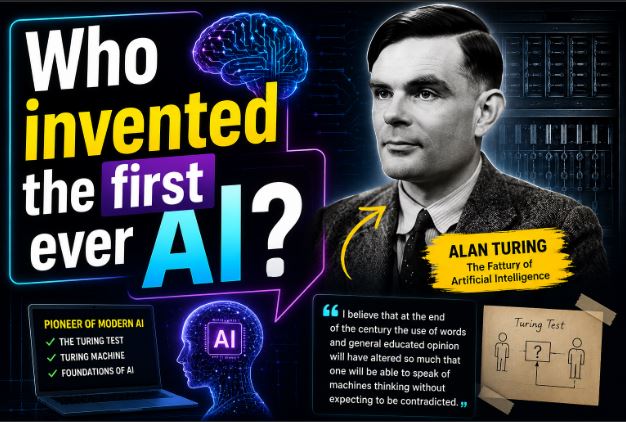
Table of Contents
ToggleIntroduction
Who Created Artificial Intelligence First? Inside the Origin of the First AI
Meta Title
Who Created Artificial Intelligence First? Origin and History of First AI Explained
Meta Description
Learn who created artificial intelligence first and how it all started. A simple look at the origin and early development of the first AI system.
Featured Image Suggestion
A timeline illustration showing early computers, Alan Turing, John McCarthy, and modern AI systems evolving step by step.
Image Alt Text: History and origin of Artificial Intelligence from early pioneers to modern AI systems.
H1: Who Created Artificial Intelligence First? Inside the Origin of the First AI
Introduction (180–250 words)
The question “Who created artificial intelligence first?” is one of the most searched topics today because AI is now part of everyday life. From voice assistants to recommendation systems, artificial intelligence feels like a modern invention. But in reality, its roots go back many decades.
The keyword Who Created Artificial Intelligence First? Inside the Origin of the First AI helps us understand that AI was not created by a single person or company. Instead, it developed gradually through scientific research, mathematical theories, and early computing experiments.
The foundation of AI began with thinkers like Alan Turing, who introduced the idea that machines could simulate human intelligence. Later, the term “Artificial Intelligence” was officially introduced by John McCarthy during a historic research event known as the Dartmouth Conference (1956).
This article explains the full origin story in a simple and structured way. You will learn who contributed to AI, how early systems worked, and how modern AI evolved from basic logic machines. We will also explore real-world examples, expert insights, and common misconceptions.
By the end, you will clearly understand that AI is not a single invention but a long journey of human intelligence, research, and innovation.
Problem Statement
Many people assume AI was invented recently by tech companies like Google or OpenAI. This misunderstanding happens because:
- Modern AI tools look “instant and magical”
- Lack of awareness about AI history
- Social media oversimplification
In reality, AI has a deep historical foundation built over decades.
Table of Contents
- What is Artificial Intelligence?
- Early Concepts of Machine Intelligence
- Who Created AI First?
- Key Pioneers of AI
- Dartmouth Conference 1956
- How Early AI Systems Worked
- Real-World Examples
- Expert Insights
- Common Mistakes
- FAQs
- Key Takeaways
- Conclusion
What is Artificial Intelligence?
Artificial Intelligence (AI) is the ability of machines to perform tasks that normally require human intelligence.
Core abilities of AI:
- Learning from data
- Problem solving
- Decision making
- Language understanding
AI is not a single invention—it is a combination of many technologies.
Early Concepts of Machine Intelligence
The idea of machines thinking existed long before computers.
Key early ideas:
- Mathematical logic systems
- Human-like reasoning machines
- Automation theories
Alan Turing played a major role by introducing the idea that machines could simulate human thinking using algorithms.
Who Created Artificial Intelligence First?
There is no single creator of AI.
However, key contributions came from:
- Alan Turing → theoretical foundation
- John McCarthy → named the field “Artificial Intelligence”
- Early research teams → built first experimental systems
So, AI is a collective scientific achievement, not a single invention.
Key Pioneers of Artificial Intelligence
Alan Turing
- Introduced machine intelligence theory
- Developed Turing Test concept
John McCarthy
- Coined the term AI
- Organized AI research direction
Marvin Minsky
- Developed early AI models
- Advanced machine learning concepts
Dartmouth Conference 1956 (AI Birth Point)
The Dartmouth Conference (1956) is considered the official birth of AI.
Why it matters:
- First formal AI research proposal
- Scientists collaborated globally
- AI became a recognized academic field
How Early AI Systems Worked
Early AI systems were very simple compared to today.
Examples:
- Rule-based logic programs
- Chess decision systems
- Basic problem-solving algorithms
They did not learn automatically but followed fixed rules.
Real-World Example
In early labs:
- Computers solved math equations
- Machines played simple strategy games
- Researchers tested logic-based reasoning
This showed that machines could mimic intelligence in limited ways.
Expert Insights
From a historical research perspective:
- AI evolved from mathematics and logic
- It developed in stages, not overnight
- Modern AI is built on decades of progress
Common Mistakes
- Thinking AI was invented by one person
- Confusing modern AI with early AI
- Ignoring historical contributions
Best Practices (Understanding AI History)
- Study AI timeline properly
- Understand contributions of multiple scientists
- Avoid social media myths
FAQs
1. Who created Artificial Intelligence first?
AI was not created by one person; it was developed by many researchers.
2. When did AI start?
AI officially began in 1956 at the Dartmouth Conference.
3. Who is the father of AI?
John McCarthy is known as the father of AI.
4. What was the first AI system?
Early rule-based systems and logic programs.
5. Is AI a modern invention?
No, it has been developing since the 1940s.
6. Why is Alan Turing important?
He introduced the idea of machine intelligence.
Key Takeaways
- AI has no single inventor
- Alan Turing and John McCarthy are key pioneers
- 1956 marked the official start of AI
- AI developed gradually over decades
- Modern AI is built on early research foundations
Conclusion (Short & Clear)
Artificial Intelligence was not created by one person or one company. It is the result of decades of research by scientists like Alan Turing and John McCarthy, with the Dartmouth Conference (1956) marking its official beginning.
Understanding this history helps us see AI not as a sudden invention, but as a long journey of human innovation that continues today.
Call To Action
If you want, I can next turn this into a high-ranking blog (WordPress SEO setup + schema + internal linking + keywords cluster) for faster Google indexing.
Lorem ipsum dolor sit amet, consectetur adipiscing elit. Ut elit tellus, luctus nec ullamcorper mattis, pulvinar dapibus leo.
If you’ve ever wondered who actually invented AI, you’re not alone. It sounds like something that should have one clear inventor like a light bulb or a phone.
But AI is different.
There is no single person who invented the first AI.
Instead, it started as an idea, then slowly became real through different breakthroughs in the 1950s. The name “Artificial Intelligence” was officially introduced by John McCarthy in 1956, while early programs like Logic Theorist by Allen Newell and Herbert A. Simon showed that machines could actually solve problems in a “thinking” way.
Even earlier, Alan Turing had already asked the big question: can machines think?
That’s really where it all begins.
Real-life example
Think about Google Maps.
One person didn’t invent it.
One team didn’t build it alone either.
- One group worked on maps
- Another on GPS
- Another on traffic prediction
- And many kept improving it over time
AI is exactly like that.
It wasn’t invented in one moment,it was built piece by piece until it became what we use today.
What Is Artificial Intelligence?
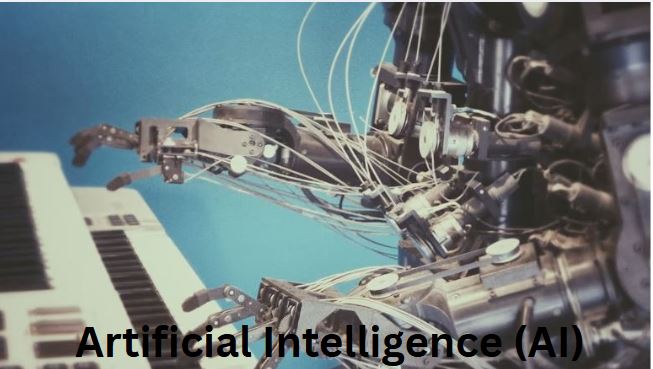
Artificial Intelligence, or AI, means making machines smart.
It means teaching computers to think and learn.
In simple words, AI helps machines do things like humans.
They can understand, decide, and improve over time.
AI is not magic.
It works using data and patterns.
The more data it gets, the better it becomes.
Today, AI is everywhere.
You use it more than you think.
For example,
when you search on Google, it shows the best results.That is artificial Intelligence (AI).
When your phone unlocks with your face,that is AI.
When YouTube suggests videos you like,that is also AI.
AI makes life easier.It saves time.It helps us make better decisions.
But remember, AI is still a tool.It does not think like humans fully.It only follows what it learns.
Real-life example:
Think about Google Maps.You open it and enter a location.It shows the fastest route.
It even avoids traffic.That is AI helping you reach faster.
So, in short:
AI is about smart machines that learn, think, and help us in daily life.
What does Artificial Intelligence actually mean?
Artificial Intelligence, or AI, simply means this:
machines doing tasks that usually need human thinking.
That can be things like:
- solving problems
- recognizing faces
- understanding speech
- making decisions
It’s not about robots taking over the world.
It’s more like software that “learns patterns” and responds smartly.
Why everyone searches “Who invented AI?”
Because it sounds like there should be one clear answer.
Like:
- Who invented the light bulb? → Edison
- Who invented the phone? → Bell
So people assume AI must also have one inventor.
But AI doesn’t work like that.
It wasn’t built in one day or by one person.
It grew step by step over decades.
That’s why the question gets searched so much… and also why the answer feels confusing.
AI is not a single invention – here’s why
AI is more like a long chain of ideas.
Different people added different pieces:
- One person asked if machines can think
- Another gave it a name
- Others built early programs
- Later researchers improved learning systems
- And today we have tools like ChatGPT
So AI is not one invention.
It’s more like a timeline of progress.
Think of it like building a house:
- one person lays the foundation
- another builds the walls
- someone else adds electricity
- and later it becomes a full home
AI is the same idea.
Who Invented the First Ever AI? Full History Explained Simply
There’s no single person who “invented” the first ever AI. That’s the honest answer.
AI didn’t show up like a light bulb moment. It slowly came together over time, built by different people with different ideas.
But if you’re looking for the real starting point, one name always comes up: Alan Turing.
He didn’t build AI, but he asked the question that started everything:
“Can machines think?”
That question changed the whole game.
So where did AI actually begin?
The real birth of AI as a field happened in 1956 at a place called the Dartmouth Conference.
A computer scientist named John McCarthy is the one who officially coined the term “Artificial Intelligence.”
From there, researchers started trying to build machines that could “think,” solve problems, and learn.
What was the first AI like?
The first real AI program was called Logic Theorist.
It was created by Allen Newell and Herbert Simon.
It could solve math problems and prove logic statements—something people thought only humans could do at the time.
It wasn’t smart like today’s AI, but back then, it felt like magic.
Simple way to understand it
Think of AI like a huge building.
- Alan Turing asked the first big question (the idea)
- John McCarthy gave it a name (the label)
- Newell and Simon built the first working piece (the first machine intelligence)
No single inventor. Just a chain of breakthroughs.
Real-life example
Imagine your phone calculator app.
Now imagine the 1950s version of that—but instead of just calculating numbers, it could actually solve logical puzzles step by step.
That’s what Logic Theorist was like.
It was slow, limited, and very basic… but it proved something huge:
machines could actually “reason.”
Final takeaway
So if someone asks: “Who invented the first AI?”
The real answer is:
No single person did. But Alan Turing inspired it, John McCarthy named it, and early researchers built the first working AI programs in the 1950s.
That’s how AI was born—not in one moment, but step by step.
Who Created Artificial Intelligence and When Did It Start?
There isn’t one single person who “created” Artificial Intelligence. It didn’t come from one inventor sitting in a room and building it overnight.
AI started as an idea… and slowly became a real field over time.
So who started AI?
The earliest spark comes from Alan Turing.
Back in the 1940s, he asked a bold question:
“Can machines think?”
That question didn’t create AI yet—but it planted the seed.
Then in 1956, things officially kicked off.
A computer scientist named John McCarthy organized a workshop at Dartmouth College.
That’s where the term “Artificial Intelligence” was first used.
So if you want a clean answer:
- Alan Turing → started the idea
- John McCarthy → named AI and launched it as a field
- Early researchers → built the first AI programs.
When did AI actually start?
The real starting point of AI as a science is 1956.
That’s when people first seriously tried to build machines that could:
- solve problems
- learn rules
- imitate human thinking
What did early AI look like?
It was nothing like ChatGPT or Siri.
One of the first AI programs was called Logic Theorist.
It was built to solve math logic problems step by step.
Slow. Simple. But groundbreaking.
Real-life example
Think of a basic GPS route planner.
Now imagine the earliest AI version of that in the 1950s—
not giving traffic updates or voice directions…
just figuring out step-by-step logic like a puzzle solver.
That’s how basic early AI was.
But at the time, it felt like the machine was “thinking.”
Simple takeaway
AI wasn’t created in one moment.
It started as an idea in the mind of Alan Turing.
It got its name from John McCarthy in 1956.
And it slowly grew through experiments that tried to copy human thinking.
So AI wasn’t “created” by one person.
It was built step by step by many minds over time.
The Real Story Behind the First Artificial Intelligence Ever Built

There’s no dramatic “one moment” when the first AI was built. No single machine that suddenly became intelligent overnight.
The real story is slower… and honestly, more interesting.
So what was the first AI ever built?
The first program that people widely call “AI” was something called Logic Theorist.
It was created in the mid-1950s by Allen Newell and Herbert A. Simon.
Its job was simple but shocking for that time:
solve math and logic problems step by step, like a human would.
When did it happen?
Around 1956, during a famous event called the Dartmouth Conference.
That’s also when the term “Artificial Intelligence” was first used by John McCarthy.
So this is basically where AI history officially begins.
Why was it such a big deal?
Because before this, computers were just calculators.
They followed instructions. That’s it.
But Logic Theorist felt different.
It didn’t just calculate—it reasoned through problems.
People at the time genuinely felt like the machine was “thinking.”
Real-life example
Imagine a chess puzzle.
You don’t just move randomly.
You think:
- If I move here…
- Then the opponent responds like this…
- So the best move is this…
Now picture a 1950s computer doing that same step-by-step thinking.
That’s what Logic Theorist did—but for math and logic problems instead of chess.
The real truth
The “first AI” wasn’t a robot walking around or a talking machine.
It was a simple program that proved something powerful:
Machines can follow reasoning, not just instructions.
And that one idea opened the door to everything we see today—Siri, Google, ChatGPT, all of it.
Simple takeaway
The first real AI wasn’t one invention.
It was:
- a small program (Logic Theorist)
- built in the 1950s
- that showed machines could think step-by-step
That’s where the story of artificial intelligence actually begins.
John McCarthy – The Father of Artificial Intelligence
John McCarthy is called the father of Artificial Intelligence ( AI). He gave this field its name.
In 1956, he used the term Artificial Intelligence for the first time.
Before that, people had ideas, but no clear name.
He believed machines could think and learn.Not like humans, but in their own way.
He also helped build early AI programs.His work gave direction to future research.
So when people ask, “Who started AI?”
His name always comes first.
Real-life example:
Think about naming a new invention.
Once it has a name, people understand it better.
They can study it and improve it.
That is what John McCarthy did for AI.
History of AI Timeline
AI started in the 1940s and 1950s.
It grew step by step over time.
Example: like a small idea slowly becoming a big technology.
How AI started in the 1950s
In 1956, the term “Artificial Intelligence” was officially used.
Scientists wanted machines to think and solve problems.
Example: like teaching a computer to solve simple puzzles.
First AI research projects
Early projects included logic programs and problem solvers.
One famous system was Logic Theorist.
Example: like a computer proving a math problem like a student.
Evolution of AI from past to present
AI started with simple rules.
Now it can learn from data and improve itself.
Example: like old calculators vs today’s smart assistants that understand your voice.
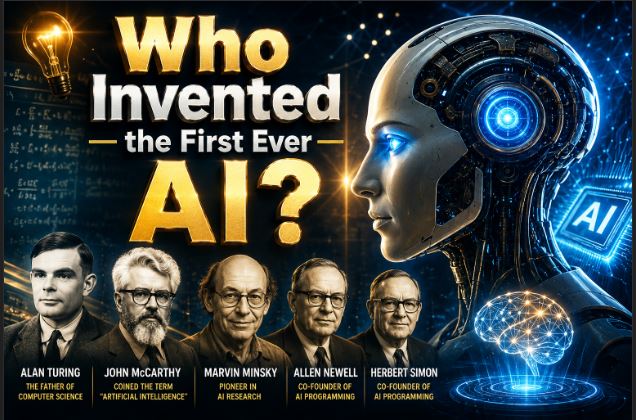
Key people behind AI (the real faces behind the idea)
AI didn’t come from one genius or one lab.
It came from a few big thinkers who slowly shaped the whole field.
Here are the names that actually matter.
Alan Turing – the idea starter
Before AI even had a name, Alan Turing was already thinking about it.
He asked a simple but powerful question:
“Can machines think?”
He also created the Turing Test, which tried to measure if a machine can act like a human in conversation.
He didn’t build modern AI, but honestly, he started the thinking behind it.
John McCarthy – the man who named AI
In 1956, John McCarthy gave the field its name:
Artificial Intelligence
He also helped organize the famous Dartmouth Conference, where AI officially became a research field.
Without him, AI might not even be called AI today.
Allen Newell & Herbert A. Simon – the first builders
These two built one of the first AI programs ever:
Logic Theorist
It could solve logic and math problems step by step.
This was the first real proof that machines could “reason,” even in a basic way.
Marvin Minsky – the AI builder of early ideas
Marvin Minsky was one of the strongest voices in early AI research.
He worked on making machines that could:
- learn
- solve problems
- mimic human thinking
He helped push AI from theory into real experiments.
Why these people matter
Each one did a different job:
- Turing → asked the big question
- McCarthy → named the field
- Newell & Simon → built the first AI program
- Minsky → expanded AI research
AI is basically their combined effort.
The Dartmouth Conference – Where AI Began
This is where AI officially started.In 1956, a group of scientists met at Dartmouth College.They wanted to study smart machines.
This meeting was organized by John McCarthy.He invited other experts to join.They shared ideas.They discussed how machines could learn and think.
This event gave AI a clear beginning.It turned a simple idea into a real field of study.After this, research in AI started growing fast.
Real-life example:
Think of it like a startup meeting.A few people come together with an idea.
They plan it and give it a direction.
Later, that idea becomes something big.That is exactly what happened at Dartmouth.
The early idea of machines that think like humans
Long before AI existed, people were already imagining it.
The idea was simple but wild:
What if a machine could think like a human?
Back then, computers were just big calculators.
No learning. No reasoning. Just numbers.
But some thinkers believed machines could do more than that.
Alan Turing and the beginning of AI thinking
The real starting point comes from Alan Turing.
He didn’t build AI, but he asked the question that changed everything:
“Can machines think?”
That question sounds simple today, but in the 1940s it was revolutionary.
Turing basically said:
“If a machine can act like it’s thinking… does it matter what it really is inside?”
That idea became the foundation of AI thinking.
The Turing Test: the first step toward AI
Turing also came up with a test.
It’s called the Turing Test.
Here’s the idea in simple words:
If you talk to a machine and a human, and you can’t tell which is which…
then the machine is showing “human-like intelligence.”
It wasn’t perfect, but it gave people a way to measure machine intelligence.
The Dartmouth Conference (1956): where AI was born
Fast forward to 1956.
A group of scientists gathered at Dartmouth College in the US.
This meeting is important because:
it officially started AI as a field of study
They believed something bold:
machines could be made to learn, reason, and solve problems like humans.
This is where the real AI journey began.
Who officially coined the term “Artificial Intelligence”?
That credit goes to John McCarthy.
He was the one who named it “Artificial Intelligence” during that Dartmouth workshop.
So he didn’t just study AI—he literally gave it its identity.
When was AI first invented?
AI was not invented on one exact day.It started in the 1950s.
In 1956, the term “Artificial Intelligence” was officially used at a research event.
That moment is often called the birth of AI.
Before that, scientists like Alan Turing were already thinking about machine intelligence in the 1940s and 1950s.
For example, early computers were used to solve math problems step by step.
That was the beginning of machines doing “smart” tasks.
Who created the first AI system?
There is no single creator of the first AI system.It was built by many researchers together.
One of the earliest AI systems was the Logic Theorist.It was created in the 1950s by Allen Newell and Herbert A. Simon.
For example, this program could solve simple math logic problems.
It was like a computer proving a puzzle step by step, just like a student would do on paper.
Who discovered Artificial Intelligence?
Artificial Intelligence was not “discovered” by one person.It was developed over time by many scientists.
The name “Artificial Intelligence” was given by John McCarthy in 1956.That is why he is often called the founder of AI.
Earlier, Alan Turing helped shape the idea.He asked if machines can think like humans.
For example, early computers were used to solve logic puzzles step by step.
That was the first simple form of AI thinking.
Alan Turing and AI
Alan Turing was one of the first thinkers of AI.
In 1950, he asked if machines can think.
Example: like a computer trying to solve a puzzle like a human brain.
John McCarthy and AI term
John McCarthy gave the name “Artificial Intelligence” in 1956.
He helped start AI as a real field.
Example: like naming a new subject in school.
Marvin Minsky contribution
Marvin Minsky built early AI systems and labs.
He worked on teaching machines to learn.
Example: like a robot learning simple tasks step by step.
Early AI scientists
Many scientists worked together in the beginning.
They created simple programs to solve logic and math problems.
Example: like a computer solving basic equations like a student on paper.
The first AI program ever created?
The first AI program most people point to is called Logic Theorist.
It was built in the mid-1950s by Allen Newell and Herbert A. Simon.
This wasn’t a chatbot or robot.
It was a program that worked on a computer and solved logic problems.
Simple idea, but a huge moment in history.
What was “Logic Theorist” and why it matters
Logic Theorist was basically a smart problem-solver for math and logic proofs.
Instead of just following fixed steps, it tried different paths—almost like thinking.
It even managed to prove some theorems from a famous math book.
That’s why it mattered so much.
Because it showed something new:
– a machine could “reason” in a way that looked human-like.
Not perfect thinking. But structured thinking.
That was a breakthrough.
Early AI experiments in the 1950s and 1960s
After Logic Theorist, researchers got excited and started building more programs.
Some examples from that time:
- programs that solved math puzzles
- early chess-playing systems
- simple language experiments
- problem-solving systems that followed rules
But everything was very basic.
Computers were slow. Memory was tiny.
So AI was more like “controlled thinking,” not real intelligence.
Still, it was enough to prove the idea was possible.
How early AI could solve problems like humans ?
Early AI didn’t “understand” things like we do.
Instead, it worked like this:
- try one step
- check the result
- try another step
- keep going until it finds a solution
Kind of like solving a maze by testing every path until one works.
That’s very similar to how humans solve puzzles too just more structured and mechanical.
How AI works in real life
AI learns from data and patterns. Then it makes decisions or suggestions.
Example: YouTube suggesting videos you may like.
Machine learning vs AI
AI is the big idea of smart machines. Machine learning is a part of AI that helps machines learn from data.
Example: Netflix learns your taste and recommends movies.
Is AI made by one person or many?
AI was not created by one person.
Many scientists built it over time.
Example: like a big building made by many workers, not just one.
Examples of early AI systems
Early AI systems were simple programs.
They solved logic and math problems.
Example: a computer proving basic puzzles step by step.
How AI started in computers
AI started when computers followed rules to solve problems.
Scientists tried to make them think in steps.
Example: like a calculator solving long equations.
First AI program in history
One of the first AI programs was Logic Theorist.
It was made in the 1950s by Allen Newell and Herbert A. Simon.
Example: it could prove simple math logic like a student.
Early computer thinking experiments
Scientists tested if computers could “think.”
They gave machines small problems to solve.
Example: like asking a computer to play simple chess moves.
How AI evolved over time
AI didn’t just “upgrade” in one jump.
It grew slowly, hit roadblocks, then suddenly exploded again.
Think of it like a rollercoaster, not a straight line.
From rule-based machines to modern AI
The first AI systems were very basic.
They were called rule-based systems.
Meaning:
if this happens → do that
if condition A → follow step B
No learning. No memory. No adaptation.
Just strict instructions written by humans.
Later, things changed.
AI stopped just following rules and started learning from data.
That’s when real progress began.
AI Winter: when progress slowed down
At some point, excitement turned into disappointment.
Computers weren’t as powerful as expected.
AI systems were too limited.
Funding dropped. Interest faded.
This period is called the AI Winter.
Basically:
people thought AI was overhyped
so research slowed down for years
But the idea didn’t die. It just paused.
The rise of machine learning and deep learning
Later, something important changed: data + powerful computers.
Instead of giving AI strict rules, researchers started saying:
“Let it learn from examples.”
That’s Machine Learning.
Then came Deep Learning, which uses brain-like networks to find patterns in huge amounts of data.
This is when AI started getting really smart:
- recognizing faces
- translating languages
- recommending videos
How AI became what we use today
Fast forward to now.
AI is everywhere:
- ChatGPT → writes and answers like a human
- Siri / Alexa → voice assistants
- Google Maps → predicts traffic
- YouTube / Netflix → recommends content
The difference now is scale.
AI doesn’t just follow rules anymore.
It learns from massive amounts of real-world data.
Modern AI connection
Modern AI like ChatGPT didn’t just appear out of nowhere.
It’s built on decades of trial, error, and small breakthroughs.
Early AI was the foundation.
Modern AI is the upgraded version running on massive data and powerful computers.
Same idea. Different level.
How early AI led to ChatGPT and modern tools
Early AI in the 1950s could only follow simple rules.
Then came machine learning, where AI started learning from examples.
Later, deep learning made things even stronger.
It copied how human brains recognize patterns.
That’s the real bridge.
So the path looks like this:
early rule-based AI → machine learning → deep learning → ChatGPT-style AI
ChatGPT is basically the result of all that progress stacked together.
Difference between old AI and today’s AI
Old AI was like a strict rulebook:
- “If X happens, do Y”
- No learning
- No memory
- Very limited tasks
Today’s AI is completely different:
- learns from huge data
- understands patterns
- generates text, images, even code
- adapts to new situations
Old AI was rigid.
Modern AI feels flexible and almost “alive” in conversation.
Why AI is growing so fast right now
Three big reasons:
1. Massive data
The internet gave AI billions of examples to learn from.
2. Powerful computers (GPUs)
Modern chips can process huge amounts of information quickly.
3. Better algorithms
Smarter learning methods like deep learning made AI more efficient.
Put all three together, and AI suddenly exploded in capability.
That’s why it feels like AI is “everywhere” now.
Other Important AI Pioneers You Should Know
AI did not grow because of one person.Many smart people helped build it.
Let’s look at a few important names.
First, Alan Turing.He asked a powerful question: Can machines think?
He also created the idea of the Turing Test.
It checks if a machine can act like a human.
Next, Marvin Minsky.
He believed machines could learn like humans.
He helped build early AI systems.
He also co-founded an AI lab at MIT.
Then, Herbert A. Simon.
He worked on decision-making systems.
He showed how machines can solve problems step by step.
Another key name is Allen Newell.He worked with Simon.
Together, they built one of the first AI programs.
Each of these people added something important.
They turned ideas into real systems.
That is how AI slowly grew over time.
Real-life example:
Think about building a house.One person designs it.Another builds it.
Another adds electricity and finishing.
In the end, it becomes complete.
AI is just like that.Different experts worked together.And today, we use AI in daily life.
How AI Has Evolved Over Time? (Simple Timeline)
AI did not become powerful overnight.It grew slowly, step by step.
In the beginning, it was just an idea.Alan Turing asked if machines can think.
In 1956, AI became a real field.At the Dartmouth Conference, scientists started working on it.
In the 1960s and 70s, early programs were built.They could solve simple problems.
Then progress slowed down.Computers were not powerful enough.
In the 1990s, AI improved again.Machines started beating humans in games.
In the 2000s, data and internet changed everything.
AI became smarter and faster.
Today, AI can learn from huge data.
It can understand images, voice, and text.
So the journey is simple:
Idea → Research → Slow growth → Big comeback → Smart AI today
Real-life example:
Think about mobile phones.
Old phones could only call.
Now smartphones can do everything.
AI has grown in the same way.
Real-Life Examples of AI Today
Artificial Intelligence (AI) is not just theory.It is part of your daily life.You use it without noticing.
When you unlock your phone with your face,that is AI.
When YouTube suggests videos,that is AI.
When Google shows search results,
that is AI.
When you type and your phone auto-corrects words,
that is also AI.
Even apps like maps use AI.
They show traffic and fastest routes.
AI is also used in hospitals.
Doctors use it to study reports faster.
It is used in shopping apps too.
They suggest products you may like.
Real-life example:
Open Spotify or YouTube.
You see “Recommended for you.”
That is AI learning your taste.
It studies what you watch or listen.
Then it shows similar content.
Simple. Smart. Helpful.
Why AI Is Important in Today’s World
Think about how many times you use your phone every day.
When it suggests the next word,
or shows videos you may like,
or finds the fastest route — that is AI.
AI is very important today.
It makes life easy.
It saves time.
It works in a smart way.
AI helps people do things better.
You can do more work with less effort.
Example:
When you use Google Maps,
and it avoids traffic,
that is AI saving your time.
Benefits and Impact of AI
1. Saves Time
ArtificiaI Intelligence does boring, repetitive tasks quickly.
Example: Chatbots answering customer questions 24/7.
2. Better Decisions
AI analyzes huge data in seconds.
Example: Doctors use AI to detect diseases early from scans.
3. Improves Daily Life
From smart assistants to shopping suggestions, AI is everywhere.
Example: Netflix recommending shows you actually like.
4. Boosts Businesses
Companies use AI to understand customers and increase sales.
Example: Online stores suggesting products based on your history.
5. Helps in Dangerous Work
AI can work in risky environments.
Example: Robots used in bomb disposal or deep mining.
Challenges and Limitations of AI
Artificial Intellence (AI) is powerful but not perfect.
1. Job Loss
Machines can replace some human jobs.
Example: Automated factories need fewer workers.
2. Bias and Errors
AI depends on data. Bad data = wrong results.
Example: Facial recognition sometimes misidentifies people.
3. Privacy Concerns
AI collects a lot of personal data.
Example: Apps tracking your behavior online.
4. High Cost
Building AI systems can be expensive.
5. Lack of Human Touch
AI cannot truly feel emotions or understand context like humans.
FAQ ( Frequently Asked Questions )
Who created AI 1st?
The idea of AI was first created by John McCarthy. He is known as the “Father of Artificial Intelligence.”
Example: He organized the first AI conference and helped build early computer thinking systems.
Who created the original AI?
The original idea of AI was developed by early computer scientists like Alan Turing and later defined by John McCarthy. McCarthy officially coined the term “Artificial Intelligence” in 1956.
Example: Alan Turing created the idea of machine thinking, and McCarthy started formal AI research programs.
Who is the founder of AI?
The founder of AI is John McCarthy. He created the term “Artificial Intelligence” in 1956 and started AI research.
Example: He organized the Dartmouth Conference where AI was first introduced as a field.
Who invented the first AI in the world?
The first AI was not made by one person. It was developed by early scientists like Alan Turing and John McCarthy together.
Example: Alan Turing created the idea of machine thinking, and John McCarthy started AI as a research field in 1956.
Which 3 jobs will survive AI?
Jobs that will survive AI are healthcare workers, teachers, and creative jobs. These jobs need human emotion, care, and creativity.
Example: Doctors treat patients, teachers guide students, and artists create original ideas that AI cannot fully replace.
Did AI exist before ChatGPT?
Yes, AI existed long before ChatGPT. It was used in search engines, voice assistants, and recommendation systems.
Example: Google search, Siri, and YouTube recommendations all used AI before ChatGPT was launched.
Did Elon Musk develop AI?
Elon Musk did not directly create AI, but he is involved in AI companies like xAI and supports AI development. He also warns about AI safety risks.
Example: He helped fund OpenAI in its early stage and now builds AI systems like Grok for chat use.
Who is current AI?
AI is not a single person. It is a technology created by many companies and researchers around the world.
Example: Tools like ChatGPT, Google AI, and Gemini are current examples of AI systems used today.
Which city is called AI City?
There is no official “AI City” in the world. But San Francisco is often called the AI hub because many AI companies are based there.
Example: Companies like OpenAI and Google work in San Francisco, where many AI tools are developed.
Can AI run a city?
AI cannot fully run a city. It can only help manage traffic, electricity, and services.
Example: Smart cities use AI to control traffic lights and reduce power waste, but humans still make decisions.
Can AI build a home?
AI cannot physically build a home. But it can design houses and help engineers plan construction.
Example: Architects use AI to create 3D home designs and plan better building layouts.
What are 5 uses of AI in daily life?
- Phone unlock
Your phone uses face or fingerprint recognition.
Example: You unlock your phone with your face. - Maps and navigation
AI shows the fastest route.
Example: Google Maps guiding you through traffic. - Video suggestions
AI recommends what to watch.
Example: YouTube suggesting new videos. - Online shopping
AI shows products you may like.
Example: Amazon recommending items based on your search. - Voice assistants
AI answers your questions.
Example: Asking Siri or Google Assistant for weather updates.
Why do 85% of AI projects fail?
Many AI projects fail due to poor data, unclear goals, and lack of skilled teams. Some also fail because they are too expensive or not useful in real life.
Example: A company builds an AI tool without good data, so it gives wrong results and gets abandoned.
How AI changed over time
AI started simple.
It only followed fixed rules.
Now it learns from data and improves itself.
Example: old calculators vs today’s smart voice assistants.
AI before ChatGPT
Before ChatGPT, AI was already in daily use.
It powered search engines and recommendation systems.
Example: Google Maps showing the fastest route.
Biggest AI inventions after 2000
After 2000, AI grew very fast.
Machine learning, deep learning, and voice assistants became popular.
Example: Siri answering questions or Netflix suggesting shows you like.
Common Problems People Face in “Who Invented the First Ever AI?” And Simple Solutions
This question sounds simple.
But when people try to find the answer, things get confusing fast.
Because Artificial Intelligence doesn’t have just one inventor.
Let’s break down the real problems in a simple way.
1. Confusing Different Names in History
Many people get mixed up with different scientists.
They think one person created AI.
Real-life example
A student reads online that one scientist invented AI.
Then another article says someone else did it.
Now they are confused about the real answer.
Simple solution
Understand this clearly:
AI was developed by multiple researchers, not just one person.
2. Too Many Opinions Online
Every website gives a different story.
That creates more confusion.
Real-life example
One blog says John McCarthy invented AI.
Another mentions Alan Turing as the father of AI ideas.
A learner gets stuck not knowing which is correct.
Simple solution
Stick to trusted history sources or academic references.
3. Mixing “AI Idea” and “AI Term”
People confuse the idea of AI with the actual invention.
Real-life example
Some people think AI started when computers became smart.
But others say it started with early theoretical concepts.
Simple solution
Know the difference:
- Alan Turing → early AI ideas
- John McCarthy → coined the term “Artificial Intelligence”
4. Overthinking the Timeline
AI didn’t start in one year.
It developed slowly over time.
Real-life example
A learner tries to find a single “start date” for AI.
But history shows it evolved across decades.
Simple solution
Think of AI as a journey, not a single invention.
5. Lack of Simple Explanations
Most answers online are too technical.
Beginners struggle to understand.
Real-life example
A student reads a long article full of scientific terms and gives up halfway.
Simple solution
Use simple summaries:
AI = developed by many scientists over time, not one inventor.
Final Thoughts
The question “Who invented the first AI?” is tricky because:
- There is no single inventor
- Many scientists contributed
- History is spread over time
- Online sources can be confusing
In simple words:
AI is not invented by one person. It is built step by step by many brilliant minds over time.-
Practical Experience About “Who Invented the First Ever AI?”
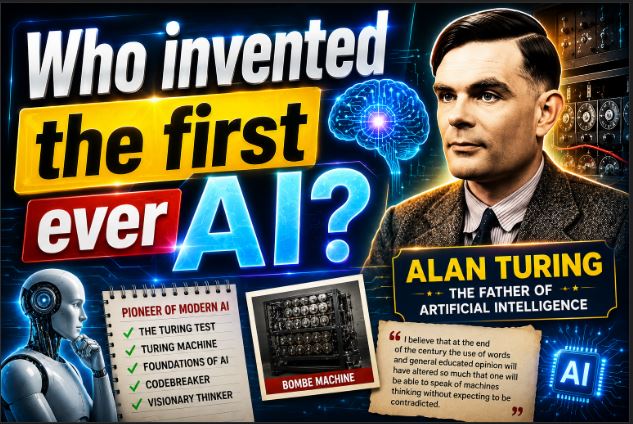
When I started digging into “Who invented the first ever AI?”, I honestly expected one clear answer.
But the more I explored, the more I realized it’s not that simple. At first, I kept seeing different names like Alan Turing and John McCarthy, which confused me a lot. Some articles explained Turing as the person who laid the foundation of machine thinking, while others credited McCarthy for officially naming Artificial Intelligence.
Even in online study groups, people had mixed opinions, and that made the topic even more unclear for beginners.
From what I observed, learners and small organizations often struggle with this confusion because they expect a single inventor story, like other technologies. But in reality, AI is more like a team effort built over many years.
The experience becomes clearer once you understand that it’s a journey, not a single invention.
Looking at the future, I feel this topic will be taught in a simpler way, so beginners don’t get lost in conflicting information and can easily understand how AI actually evolved.
The Future of Artificial Intelligence
The future won’t change who “invented” the first AI because that part is already history.
But what will change is how people understand it.
Right now, most people say:
-John McCarthy is the father of AI (he named it in 1956)
-Newell and Simon built the first real AI program (Logic Theorist)
That story is already set.
So what’s the “future” part here?
In the future, people will stop focusing on who did it first…
and start focusing more on:
– how AI changed human life
-how early ideas led to modern systems like —–ChatGPT
– and how many people contributed, not just one name
Because honestly, AI was never a one-man invention.
It was a chain of minds.
How history might be seen later
Right now we say:
- “McCarthy created AI”
- “Turing inspired it”
But future books might say something different like:
“AI was created by generations of researchers working together.”
Less about one hero. More about a timeline.
Real-life example
Think about the internet.
No one says one person invented the internet anymore.
We talk about:
- engineers
- researchers
- companies
- decades of development
AI is going the same way.
In the future, people won’t just ask “who invented AI?”
They’ll ask:
“How did humans build something that thinks with us?
Simple takeaway
- The original AI story is already in history
- McCarthy, Turing, Newell, and Simon are key names
- The future will focus less on one inventor and more on teamwork
- AI is becoming a shared human achievement, not a single invention
So the future of this question isn’t a new name…
It’s a better understanding of how big the journey really was.
Conclusion : Who invented the first ever AI?
There’s no single inventor of the first AI. No one person can take full credit.
But if you want the honest, simple answer:
John McCarthy officially created the field of Artificial Intelligence in 1956 and named it.
Allen Newell and Herbert A. Simon built the first working AI program called “Logic Theorist.”
Alan Turing inspired the whole idea long before that.
So the truth is pretty clear:
AI wasn’t invented by one person.
It was built step by step by different minds over time.
The real takeaway
AI didn’t appear in one moment.
It started as a question… then slowly became a science… then became real software.
It’s more like a journey than an invention.
Real-life example
Think about something like a smartphone.
One person didn’t invent everything:
- one team built the screen
- another built the camera
- others built the software
- and many companies improved it over time
AI is the same story.
No single inventor. Just many people building pieces until it became what we use today.
Final simple line
The first AI wasn’t “invented” by one person.
It was created through a chain of ideas, experiments, and breakthroughs that slowly turned into modern AI.