A common point of confusion is who actually first created Artificial Intelligence and how this idea even began.
This article titled “Who Was the First to Create Artificial Intelligence?” looks at the early stage of AI and what it really means when we say machines can think or act smart.
Another guide, “What Is the Theory of Artificial Intelligence? A Clear Understanding,” also breaks the topic into simple ideas so beginners don’t feel lost.
Many people assume AI is very complex, but once you see the basics, it becomes much easier to understand.
In real life, AI theory is already working in search engines, recommendation systems, and healthcare prediction tools.
For example, IBM and NIST research shows AI learns from patterns to improve decisions over time.
Overall, this gives a simple idea of how AI works and why it matters today.

Table of Contents
ToggleIntroduction
SEO Title (H1)
What Is the Theory of Artificial Intelligence? A Clear Understanding
Meta Title
Theory of Artificial Intelligence Explained: Clear Understanding of AI Concepts
Meta Description
The theory of Artificial Intelligence is explained in this guide as a clear understanding. Learn what AI theory is, how it works, and its key concepts in simple terms.
Featured Image Suggestion
A conceptual diagram showing AI brain networks, logic flow charts, and machine learning models connecting with human cognition symbols.
SEO-Friendly URL
/theory-of-artificial-intelligence-clear-understanding
Introduction (180–250 words)
The Theory of Artificial Intelligence is one of the most important foundations of modern computer science. When we explore What Is the Theory of Artificial Intelligence? A Clear Understanding, we are essentially studying how machines can simulate human intelligence through logic, reasoning, learning, and decision-making.
Unlike practical AI applications such as chatbots or recommendation systems, the theory of AI focuses on the fundamental principles behind intelligent behavior. It explains how machines think, how they learn from data, and how they solve problems in structured and unstructured environments.
According to research from institutions like MIT and Stanford University, the theory of AI combines multiple disciplines including mathematics, computer science, cognitive science, and neuroscience. This interdisciplinary approach helps build systems that can mimic human decision-making processes.
In today’s digital world, AI theory is not just academic—it forms the backbone of technologies used in healthcare, finance, robotics, and autonomous systems. However, many beginners find it difficult to understand because it involves abstract concepts like algorithms, logic, probability, and learning models.
This article simplifies the Theory of Artificial Intelligence in a structured and easy-to-understand way. You will learn its definition, core principles, working mechanisms, real-world applications, and future importance. The goal is to give you a complete and practical understanding without unnecessary technical complexity.
Problem Statement
Most learners struggle with:
- Understanding abstract AI concepts
- Confusion between AI theory and practical AI
- Lack of structured explanations
- Difficulty connecting theory with real-world applications
This guide solves these issues by breaking everything into simple, logical sections.
What Is the Theory of Artificial Intelligence? (Definition)
The Theory of Artificial Intelligence refers to the study of how machines can simulate intelligent behavior using mathematical models, logic systems, and computational algorithms.
According to Stanford AI Research:
AI theory focuses on “building computational models that replicate human reasoning and learning processes.”
Core Components of AI Theory
1. Knowledge Representation
How machines store and organize information.
2. Machine Learning Principles
Systems that learn patterns from data.
3. Logic and Reasoning
AI uses formal logic to make decisions.
4. Problem Solving Algorithms
Step-by-step methods to solve complex tasks.
Why the Theory of AI Is Important (H2)
1. Foundation of Modern AI Systems
All AI applications are built on theoretical models.
2. Helps Build Smarter Machines
Improves decision-making capabilities.
3. Drives Innovation
Supports robotics, automation, and data science.
4. Academic and Industry Relevance
Used in research labs and tech companies worldwide.
How the Theory of AI Works
Step 1: Problem Definition
The system defines the problem logically.
Step 2: Data Modeling
Information is structured into usable formats.
Step 3: Algorithm Selection
Mathematical models are applied.
Step 4: Reasoning Process
AI simulates decision-making.
Step 5: Learning and Optimization
Systems improve using feedback loops.
Types of AI Theory Models
1. Symbolic AI
Uses logic rules and symbols.
2. Statistical AI
Based on probability and data analysis.
3. Neural Network Theory
Inspired by human brain structure.
Real-World Applications of AI Theory
Healthcare
- Diagnostic systems
- Predictive disease modeling
Finance
- Risk prediction
- Fraud detection
Robotics
- Movement planning
- Automation systems
Cybersecurity
- Threat detection algorithms
Case Study Example
In real-world AI systems like autonomous vehicles:
- The theory of AI helps define decision-making rules
- Neural networks process sensor data
- Logic systems ensure safe navigation
Companies like Tesla and Waymo apply these principles in real environments.
Expert Insights
Experts from AI research institutions highlight:
- AI theory is essential for building reliable systems
- Mathematical modeling is the backbone of intelligence simulation
- Hybrid models (logic + learning) are becoming standard
Common Mistakes in Understanding AI Theory
- Thinking AI is only coding
- Confusing theory with tools
- Ignoring mathematical foundations
- Overlooking logic-based systems
Best Practices for Learning AI Theory
- Start with basic logic and mathematics
- Understand machine learning fundamentals
- Study real-world AI systems
- Follow research papers from credible sources
Internal Linking Suggestions
- Introduction to Machine Learning
- AI vs Machine Learning vs Deep Learning
- Future of Artificial Intelligence Systems
External Authority Sources
- MIT Artificial Intelligence Research
- Stanford AI Lab Publications
- IBM AI Research Documentation
FAQ Section
1. What is the theory of Artificial Intelligence?
It is the study of how machines simulate human intelligence using algorithms and logic.
2. Why is AI theory important?
It forms the foundation of all AI systems and applications.
3. Is AI theory difficult to learn?
It can be complex, but becomes easy with structured learning.
4. What are the main parts of AI theory?
Logic, learning, problem-solving, and knowledge representation.
5. Where is AI theory used?
It is used in robotics, healthcare, finance, and automation systems.
6. Is AI theory practical or only academic?
It is both—used in research and real-world applications.
Key Takeaways
- AI theory explains how machines simulate intelligence
- It is the foundation of all AI systems
- It combines logic, mathematics, and learning models
- It is used across multiple industries
- Understanding theory improves practical AI skills
Conclusion (Short & Clear)
The Theory of Artificial Intelligence provides a deep understanding of how machines think, learn, and make decisions. When we study What Is the Theory of Artificial Intelligence? A Clear Understanding, we realize that AI is not just technology—it is a structured scientific framework built on logic, mathematics, and learning principles. This foundation helps power modern applications across industries and continues to shape the future of technology.
Call To Action
If you want to go deeper into AI, explore machine learning and neural networks next to build a strong foundation in artificial intelligence concepts.
Artificial Intelligence is everywhere.Artificial Intelligence may sound big.But the idea is simple.
It means teachi machines to act smart.They can think and make decisions.
So when someone asks,
“What Is The Theory Of Artificial Intelligence?”
They are really asking:
How do machines learn, decide, and improve like humans?
In simple words, it means making machines smart.They can learn, think, and make decisions.
AI uses data and logic to work.That’s how computers become “smart”.
It’s not only about robots.It’s about systems that learn with time.
The main goal is simple.
Teach machines to solve problems by themselves.
Real-life example:
When your phone suggests the next word, that is AI.
It learns from your typing. Then it guesses what you will say next.
So, AI theory is the base of smart technology.
It explains how machines learn and decide.
Simple idea:
AI helps machines think smarter.
What is Artificial Intelligence?
Artificial Intelligence (AI) is basically when computers are made to “think” and “learn” like humans.
But don’t take it too seriously.It’s not a robot brain sitting somewhere.It’s just smart software doing smart work.
AI learns from data.It looks at patterns.Then it makes decisions or gives suggestions.
Real-life examples
Your phone suggestions
When your phone predicts your next word while typing — that’s AI.
YouTube & Netflix
They suggest videos or shows based on what you watch.
That’s AI studying your choices.
Google Maps
It checks traffic and finds the fastest route in real time.
Chatbots
Like customer support chats that reply instantly instead of a human.
Self-driving features
Some cars can park, brake, and stay in lanes using AI.
Simple way to understand it:
AI is like a very fast learner.
It watches what you do.
Then it tries to make your life easier.
In short:
Artificial Intelligence is technology that helps machines act a bit like humans but faster and without getting tired.
What Does “AI Theory” Really Mean?
AI theory is a set of ideas.It explains how machines become smart.Machines learn from data.They find patterns.They make decisions.
It is not just about rules.It helps systems learn from experience.
You can think of it as a plan.It is behind every smart app you use.It focuses on learning from data.It finds patterns.It makes decisions.
It creates systems that get better with experience.
A Quick Look at the Origins of AI
AI did not start in one day.It developed slowly over time.
In 1956, AI became a real field of study.Researchers started to explore machine intelligence.
One important person was John McCarthy.He gave the name “Artificial Intelligence.”
He helped start early research.
After that, AI had good times and bad times.Sometimes progress was slow.
But today, AI is growing very fast.
How Does Artificial Intelligence Work?
AI is simple at the core.AI sounds complex.But it’s actually simple.
It works on three things: data, patterns, and learning.
Think of it like this: data + learning.
Here’s how it works:
It takes data.It finds patterns.It makes guesses (predictions).
It learns and gets better over time.
More data = better results.
Example:
Think about YouTube.You watch videos.It sees what you like.
Then it suggests similar videos.
With time, suggestions improve.
Real-life example:
When you type in Google, it predicts your sentence.
That’s AI learning from millions of past searches.
So, AI is not magic.It learns from data.And it improves, just like a human.
Core Concepts Behind AI Theory
AI works on a few simple ideas.These ideas make machines act “smart.”
Learning
AI learns from data.It improves with practice.
Reasoning
It thinks in a logical way.It uses facts to understand things.
Problem-solving
It finds solutions to tasks.Even when the problem is new.
Decision-making
It chooses the best option.Based on data and patterns.
Real-life example:
Think about Google Maps.You enter a location.It studies traffic and routes.
Then it picks the fastest way.
That’s AI learning, thinking, solving, and deciding just like a human, but faster.
Practical Experience About "What is Theory of Artificial Intelligence"
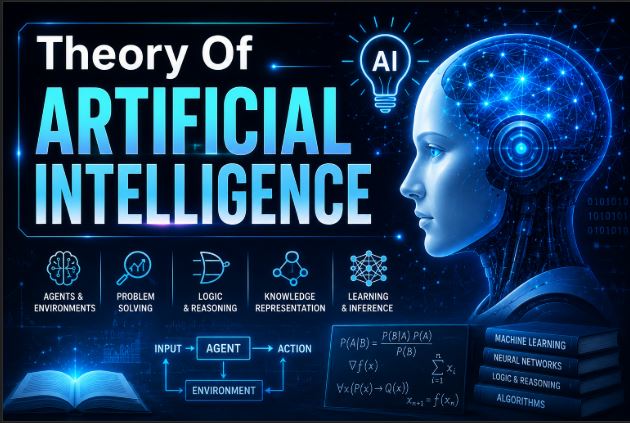
When I first started exploring the theory of Artificial Intelligence, it felt more like reading complex science than something related to real life.
At the beginning, concepts like learning models and decision systems were confusing, especially for beginners and even for some students I observed in study groups.
But slowly, I noticed how organizations actually use these ideas in practice. For example, companies use AI theory to build recommendation systems and automate customer support.
It looked simple from outside, but inside it required a lot of data, training, and fine-tuning. Some learners struggled because the theory was too technical and lacked real-world connection at first. However, once they linked it with practical tools like apps and chatbots, things became clearer.
From what I observed, the experience is challenging in the beginning but very rewarding later.
Looking at the future, it feels like AI theory will become even more important as more industries rely on intelligent systems, but it will also need simpler learning methods for beginners to understand it easily.
Types of Artificial Intelligence Theory
AI is not all the same.There are different types.Each one works in its own way.
1. Narrow AI (Weak AI)
This is the most common type today.
It does one specific task.
Examples:
Voice assistants, chatbots, recommendations.
Real-life example:
Think about Siri.
It can answer questions and set alarms.
But it cannot think beyond its job.
2. General AI (Strong AI)
This type can think like a human.
It can learn and do many tasks.
Right now, it does not fully exist.
Scientists are still working on it.
3. Super AI
This is the future idea.
It would be smarter than humans.
It could solve very complex problems.
But it is still theoretical.
Simple way to understand:
Narrow AI = one task
General AI = many tasks like a human
Super AI = smarter than humans
That’s it.
AI starts small—but the future could be huge.
Key Technologies Used in AI
AI is not just one thing.It’s a mix of different technologies working together.
Here are the main ones:
Machine Learning (ML)
This helps AI learn from data.
No need to program every rule.
Example:
Spam filters in email.
They learn what looks like spam over time.
Deep Learning
A more advanced type of learning.
It uses layers (like a brain).
Example:
Face recognition on your phone.
It learns your face and unlocks the device.
Natural Language Processing (NLP)
This helps AI understand language.
Like reading and writing text.
Example:
Chatbots and translators.
They understand what you type.
Computer Vision
This helps AI see images and videos.
Example:
Self-driving cars.
They detect roads, signs, and people.
Simple idea:
Learning + understanding + seeing = AI
That’s how AI becomes smart in real life.
Where AI Shows Up in Everyday Life
AI is not a future thing anymore.It is already part of your daily life.You just don’t always notice it.
Here is where AI shows up
Phones
Your phone understands you.
It suggests words when you type.
It makes your photos look better.
Face unlock also uses AI.
Social media
Instagram, TikTok, and YouTube show you what you like.
Watch one video → you get similar videos.
Maps
Google Maps checks traffic and finds the fastest route.
It changes your path if there is a jam.
Shopping apps
Apps like Daraz and Amazon show “recommended for you.”
AI remembers what you search.
Healthcare
Doctors use AI to read reports faster.
It helps find diseases early.
Cars
New cars help with parking and safety alerts.
Some cars can even brake automatically.
Smart assistants
Alexa, Siri, and Google Assistant are AI.
You speak, and they answer.
Netflix / YouTube / Spotify
They suggest content based on your taste.
Watch one show → more similar shows appear.
Banking
Banks block strange transactions quickly.
AI helps detect fraud.
Education apps
Apps help students learn math, languages, and writing.
Simple truth:
AI is not coming.
It is already here.
It is just working quietly in the background and making life easier.
Benefits of Artificial Intelligence Theory
Artificial Intelligence theory brings a lot of benefits.
It’s basically the idea that helps machines become smart and useful in real life.
Let’s keep it simple and real.
1. Saves Time
AI can do tasks very fast.
Real-life example:
Google search shows results in seconds.
Simple idea:
Work gets done quicker than humans.
2. Helps in Healthcare
AI helps doctors find diseases early.
Real-life example:
AI can detect cancer from scans.
Simple idea:
It supports better treatment and faster diagnosis.
3. Makes Daily Life Easy
AI is already in your phone and apps.
Real-life example:
YouTube suggests videos you like.
Simple idea:
It makes everyday life more convenient.
4. Improves Transportation
AI helps in smart driving and navigation.
Real-life example:
Google Maps avoids traffic and finds fastest routes.
Simple idea:
Travel becomes smoother and faster.
5. Boosts Business and Industry
Companies use AI to work better and faster.
Real-life example:
Online shops use AI to recommend products.
Simple idea:
Businesses save money and grow faster.
6. Reduces Human Errors
Machines don’t get tired like humans.
Real-life example:
Banks use AI to detect fraud transactions.
Simple idea:
Fewer mistakes in important work.
Final Thought
Artificial Intelligence theory is powerful and useful.
It helps in health, business, travel, and daily life.
Simple truth:
AI makes life faster, easier, and smarter.
Advantages of Artificial Intelligence Theory
1. Helps machines think smarter
The theory explains how machines can learn from data.
Example: Netflix suggests movies based on what you watch.
2. Automates hard tasks
AI theory helps build systems that do boring or repeated work.
Example: Banks use AI to detect fraud automatically.
3. Improves decision making
Machines can analyze huge data and give fast results.
Example: Weather apps predict storms using AI models.
4. Works in real-world systems
From healthcare to cars, AI theory is used everywhere.
Example: Self-driving cars use AI to understand roads.
Disadvantages of AI Theory
1. Too much dependence on machines
Humans start trusting machines blindly.
2. Job replacement fear
Machines can replace workers in some industries.
3. Complex to understand
AI theory is not easy. It needs strong math and logic.
4. Expensive to build systems
Research and development cost a lot.
Problems in AI Theory and Solutions to These Problems
1. Wrong or biased data
If data is wrong, AI gives wrong results.
Example: A hiring system may reject good candidates unfairly.
2. Lack of real understanding
AI doesn’t truly “understand” like humans. It only follows patterns.
3. Security risks
Hackers can misuse AI systems for scams or fake content.
4. Privacy concerns
AI collects and studies personal data without people realizing it.
Solutions to These Problems
1. Use clean and fair data
Better data = better AI results.
2. Human control is necessary
AI should assist humans, not fully replace them.
Example: Doctors should always confirm AI medical suggestions.
3. Strong cybersecurity
Systems must be protected from hacking and misuse.
4. Ethical rules for AI
Companies should follow strict laws while building AI tools.
Final Simple Idea
AI theory is like a blueprint for smart machines.
It teaches computers how to think step by step.
But here’s the truth:
AI is powerful, but it is not perfect.
Challenges and Concerns of Artificial Intelligence Theory
Artificial Intelligence theory sounds interesting, but it also has some real problems and concerns.
It’s not only about smart machines. There are risks we need to understand in simple terms.
Let’s break it down.
1. Data Privacy Issues
AI needs a lot of data to learn.
But this data is often personal.
Real example:
Your phone tracks what you search and watch.
Problem: People don’t always know who is using their data.
2. Job Loss Fear
AI can do many jobs faster than humans.
Real example:
Factories use robots instead of workers.
Problem: Some people lose jobs or need new skills.
3. Bias in AI
AI depends on data. If data is unfair, results are also unfair.
Real example:
An AI hiring system may ignore some candidates.
Problem: Decisions can become unfair.
4. No Human Feelings
AI does not think or feel emotions. It only follows patterns.
Real example:
A chatbot may not understand sadness or stress.
Problem: It cannot replace human care.
5. Security Risks
AI can be misused by wrong people.
Real example:
Fake videos (deepfakes) can spread lies.
Problem: It becomes hard to trust what is real.
6. Too Much Dependence
People are starting to rely too much on AI.
Real example:
Using GPS even for very easy routes.
Problem: Human thinking can become weak.
Final Thought
Artificial Intelligence theory is powerful.
But it is not perfect.
It helps in speed and smart work, but also brings risks.
The main idea is simple:
Use AI to help humans, not replace them.
What’s Changing Right Now (Latest Trends)
Things are changing fast right now.
Especially because of AI and new tech.
And honestly, most people don’t even notice how fast it’s happening.
Here’s what’s trending right now
AI is everywhere now
Not just in tech companies.
It’s in phones, apps, and even schools.
Example: students use AI to explain homework in seconds.
Apps are getting “smarter”
Apps don’t just show info anymore.
They now predict what you want.
Example: Instagram shows posts before you even search.
Short videos are taking over
TikTok, Reels, YouTube Shorts are huge now.
People prefer 10–30 second content.
Example: one quick video teaches cooking or fixing things.
Voice is becoming normal
More people are talking to devices instead of typing.
Example: “Hey Google, call mom” instead of dialing.
Self-driving features are growing
Cars can now park, brake, and stay in lanes.
You don’t fully drive anymore in some situations.
Online shopping is more personal
Apps now “guess” what you want to buy.
Example: you search one item → you see similar products everywhere.
Smart homes are rising
Lights, fans, and TVs can be controlled by voice or phone.
Example: “Turn off lights” and it just happens.
Simple truth:
Everything is becoming faster, smarter, and more automatic.
And AI is the main reason behind it.
Advantages of Theory of Artificial Intelligence in Real Life
The theory of Artificial Intelligence may sound academic.
But in real life, it is actually very useful.
It helps us understand how smart systems think and work behind the scenes.
Let’s keep it simple and real.
1. Helps Build Smart Apps
AI theory is the base of modern apps.
It explains how machines learn from data.
Real-life example
Apps like YouTube or Netflix suggest videos based on your interest.
This is possible because of AI theory working in the background.
2. Improves Healthcare Systems
Doctors use AI concepts to detect diseases early.
Theory helps design better medical tools.
Real-life example
An AI system studies X-rays and helps doctors find early signs of illness faster than manual checks.
3. Makes Daily Technology Smarter
AI theory is used in everyday tools.
From phones to search engines.
Real-life example
When you search something on Google, results appear based on smart algorithms built using AI theory.
4. Helps in Automation
AI theory explains how tasks can be automated.
That saves time and effort.
Real-life example
Factories use machines that automatically sort products without human help.
5. Improves Business Decisions
Companies use AI theory to analyze data.
It helps them make better decisions.
Real-life example
A shopping app studies customer behavior and suggests products people are more likely to buy.
6. Builds Self-Driving Technology
Self-driving cars are based on AI concepts.
Theory helps machines understand roads and traffic.
Real-life example
A smart car detects obstacles and adjusts speed automatically while driving.
7. Enhances Security Systems
AI theory is used in fraud detection and security.
It helps identify unusual activity.
Real-life example
A bank system detects suspicious transactions and blocks them instantly.
Final Thoughts
The theory of Artificial Intelligence is not just academic.
It is the foundation of modern technology.
Its main advantages are:
- Smarter apps
- Better healthcare
- Automation
- Business insights
- Advanced security
In simple words:
AI theory powers the smart systems we use every day without even noticing it.
How Theory of Artificial Intelligence is Used in People’s Real Life ?
The theory of Artificial Intelligence may sound like a classroom topic.
But in real life, it is already everywhere.
It quietly powers the tools we use every day without us even noticing.
Let’s break it down simply.
1. Social Media Recommendations
AI theory helps systems learn what you like.
That’s why your feed feels personal.
Real-life example
You watch a few cooking videos on YouTube.
After that, you start seeing more food-related content automatically.
2. Online Shopping Suggestions
E-commerce platforms use AI ideas to study buying behavior.
They predict what you might need next.
Real-life example
You search for shoes on an online store.
Later, similar shoes and discounts start appearing on your homepage.
3. Healthcare Support
Doctors use AI theory for better diagnosis tools.
It helps analyze medical data faster.
Real-life example
An AI system checks X-rays and highlights possible issues for doctors to review quickly.
4. Voice Assistants in Phones
Smart assistants work using AI concepts.
They understand and respond to human voice.
Real-life example
You ask your phone to set an alarm or play music.
It responds instantly without manual input.
5. Navigation and Maps
AI theory helps apps understand traffic patterns.
It suggests the fastest routes.
Real-life example
A map app changes your route when it detects traffic ahead, saving time on the road.
6. Banking and Security
Banks use AI theory to detect fraud and unusual activity.
It protects users from financial risks.
Real-life example
A bank blocks a transaction because it looks suspicious and different from your normal spending pattern.
7. Education Tools
AI concepts are used in learning platforms.
They adjust content based on student performance.
Real-life example
An online learning app gives easier or harder questions depending on how well a student is doing.
Final Thoughts
Theory of Artificial Intelligence is not just theory anymore.
It is deeply connected to real life.
Its use can be seen in:
- Social media
- Shopping apps
- Healthcare
- Banking
- Education
- Navigation
In simple words:
AI theory quietly runs the smart systems that make everyday life easier, faster, and more personalized.
Disadvantages of Theory of Artificial Intelligence in Real Life
The theory of Artificial Intelligence sounds powerful.
But in real life, it also has clear downsides.
When people study it deeply, they often face real struggles in understanding and application.
Let’s keep it simple.
1. Very Complex Concepts
AI theory is not easy to understand.
It uses heavy technical ideas.
Real-life example
A student tries to learn AI theory but gets stuck on terms like algorithms and neural networks.
They feel confused early and lose interest.
2. Too Much Mathematics
AI theory depends a lot on math.
Many learners struggle with it.
Real-life example
A beginner understands the idea of AI but cannot follow formulas in machine learning models.
This slows down their learning.
3. Hard to Apply in Real Life
Theory does not always show real usage clearly.
That creates a gap between learning and practice.
Real-life example
A student understands how AI works on paper but cannot build even a simple chatbot without help.
4. Outdated Information in Some Resources
Not all study materials are updated.
AI changes very fast.
Real-life example
A learner studies old AI examples that do not match modern tools like current AI apps or systems.
5. Overwhelming Amount of Content
AI theory has many topics.
It can feel too big for beginners.
Real-life example
A learner starts with AI basics but quickly gets overwhelmed by deep learning, robotics, and data science all at once.
6. Lack of Practical Guidance
Many people study theory alone.
They don’t know how to move forward.
Real-life example
A student understands concepts but has no mentor to guide them in building real projects.
7. Confusing for Beginners
AI theory is not beginner-friendly.
It takes time to understand the flow.
Real-life example
A new learner reads AI theory and feels lost because nothing connects clearly at first.
Final Thoughts
Theory of Artificial Intelligence is important, but not easy.
The main disadvantages are:
- Complex topics
- Heavy math
- Weak practical connection
- Outdated material
- Overload of information
In simple words:
AI theory is powerful, but it needs patience, practice, and clear guidance to truly understand it in real life.
Problems People Face in Theory of Artificial Intelligence And Simple Solutions
The theory of Artificial Intelligence sounds interesting.
But when people start studying it, they often get stuck.
It is not as easy as it looks from the outside.
Let’s break down the real problems in a simple way.
1. Too Much Technical Language
AI theory uses complex terms.
That confuses beginners quickly.
Real-life example
A student reads about “neural networks” and “algorithms” but cannot understand the basic meaning.
They feel lost within the first few pages.
Simple solution
Start with basics first.
Learn simple definitions before moving to advanced topics.
2. Hard Math Concepts
AI theory often includes math like statistics and linear algebra.
Many learners struggle here.
Real-life example
A beginner tries to understand AI models but gets stuck on formulas and calculations.
They stop studying because it feels too difficult.
Simple solution
Practice step-by-step.
Focus on understanding concepts, not just formulas.
3. Lack of Real-Life Examples
Theory sometimes feels disconnected from real applications.
Real-life example
A learner understands definitions but cannot connect them to real tools like chatbots or recommendation systems.
Simple solution
Always relate theory to real tools like apps, search engines, and AI assistants.
4. Too Much Information at Once
AI theory covers many topics.
That creates confusion for beginners.
Real-life example
A student tries to learn machine learning, deep learning, and robotics all together.
They feel overwhelmed and quit halfway.
Simple solution
Learn one topic at a time.
Don’t rush.
5. Difficulty in Practical Understanding
Theory alone is not enough.
People struggle to apply it in real life.
Real-life example
A learner understands AI concepts but cannot build even a simple project like a chatbot.
Simple solution
Practice small projects along with theory.
6. Outdated Study Materials
Some resources are not updated.
AI is a fast-changing field.
Real-life example
A student studies old examples that don’t match modern AI tools used today.
Simple solution
Use updated online courses and recent tutorials.
7. Lack of Guidance
Many learners study AI theory alone.
That slows progress.
Real-life example
A self-learner gets stuck on a concept for weeks without anyone to ask for help.
Simple solution
Join communities, forums, or study groups for support.
Final Thoughts
The theory of Artificial Intelligence is powerful but challenging.
The main problems are:
- Complex language
- Heavy math
- Lack of examples
- Information overload
- Poor practical connection
In simple words:
AI theory becomes easy when you break it into small steps and connect it with real-life examples.
FAQ ( Frequently Asked Questions )
What is the basic theory of AI?
The basic theory of AI is that machines can learn, think, and make decisions using data and algorithms. It copies human intelligence in a simple way.
Example: AI learns from past data to suggest videos on YouTube or answers in search engines.
What are AI theories?
AI theories are ideas that explain how machines can learn, think, and make decisions like humans. They include learning theory, reasoning, and problem-solving concepts.
Example: AI uses learning theory to recommend videos on YouTube based on your watch history.
What are the 7 types of learning theories?
The 7 main learning theories are Behaviorism, Cognitivism, Constructivism, Humanism, Connectivism, Social Learning, and Experiential Learning. They explain how humans and AI systems learn in different ways.
Example: Students learn by practice (behaviorism), by thinking (cognitivism), and by real experience (experiential learning).
Why is the theory of AI important?
It helps us understand how AI works and how it can solve real-world problems safely and correctly.
What are the main ideas in AI theory?
AI theory includes learning, reasoning, problem-solving, and decision-making.
How does AI theory work in real life?
AI learns from data and improves over time to give better results.
Example: YouTube recommendations are based on AI learning theory.
Who developed the theory of Artificial Intelligence?
Early scientists like Alan Turing and John McCarthy helped develop AI theory.
What are the types of AI theories?
They include machine learning theory, neural networks, and symbolic AI theory.
How is AI theory used today?
It is used in apps, robots, healthcare, education, and self-driving cars.
What is machine learning in AI theory?
Machine learning is a part of AI theory where systems learn from data without direct programming.
Can AI theory replace human thinking?
No, AI can assist but cannot fully replace human intelligence and emotions.
The Future of AI Theory
AI is growing very fast. Faster than most people think. What once felt like science fiction is now part of daily life.
The future of AI is about smart systems. Not just simple tools. But systems that learn and improve on their own. Like YouTube or Netflix suggesting what you want to watch.
That’s just the start. Soon, AI will understand your habits even better and act like a real helper in daily life.
Smart homes are already a good example. Lights turn on when you enter a room.
Phones suggest replies before you type. Some cars can even drive by themselves in certain situations. AI is slowly becoming part of everyday life.
Now the big idea is AGI. Artificial General Intelligence. This means AI that can think more like a human. Not just one job. But many jobs together.
Learning, thinking, and solving different problems.
Right now, AI is “narrow.” It does one task well. Like translating languages or playing chess. But AGI would be different. It could learn almost anything a human can learn.
Imagine this. One AI helps a doctor find disease, then helps a student solve math, and later writes a business plan. All in one system. That’s what AGI is aiming for.
Today’s AI is still far from that. But we can see early signs.
AI tools can write emails, explain topics, and solve problems in seconds. But they don’t truly understand things like humans do.
In real life, companies already use AI a lot. Online apps suggest products based on what you search.
Businesses use AI to study data and predict trends. It saves time and effort.
Still, AGI is not here yet. Experts are not sure when it will come. Some say many years. Some say maybe never in the way we imagine.
But one thing is clear. AI will keep getting smarter and more common in our lives.
The real question is simple. Not just how smart AI will become. But how ready we are to live with it.

Conclusion of Artificial Intelligence Theory
AI theory is not just a tech topic. It is part of real life now.
It helps us understand how machines think and learn. Without it, AI would be useless and messy tools.
Why does it matter today? Because AI is everywhere. In phones, apps, schools, hospitals, and businesses. For example, Netflix suggests movies you like. That is AI working behind the scenes.
It also helps us stay safe. Like stopping bias, reducing job loss issues, and spotting fake information. If we understand AI, we can use it in a better way.
The simple truth is this. AI is not the future anymore. It is already here.
And AI theory is the base that keeps it all working.